

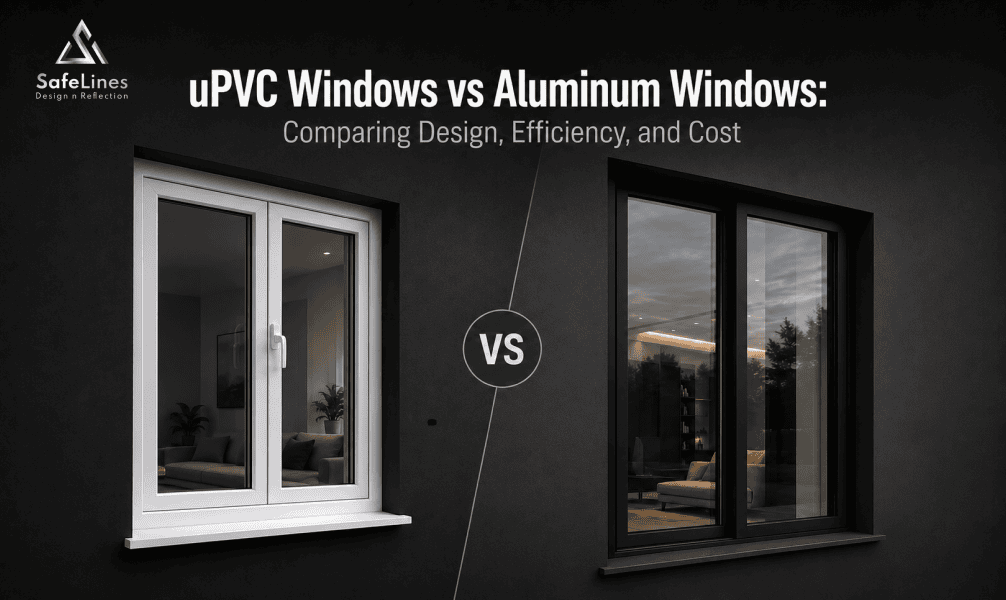
The choice of window systems is usually overshadowed by flooring, kitchens, wardrobes, and finishes. By the time windows come up, most people already feel decision fatigue, so selection often becomes a comparison between look, price, and whichever sample feels more premium in the showroom. Although there is no dearth of options in the market, uPVC windows vs aluminum windows remains the top choice for modern homes and commercial projects.
That preference did not happen by chance. Both materials solved different problems that older window systems struggled with and gradually became the standard for modern construction. But which really suits your space?
To help you decide, we have come up with this comparison of uPVC Windows vs Aluminum Windows, which looks at design, efficiency, cost, maintenance, comfort, and long-term residential performance from the perspective of how homes actually get used rather than how products are presented in brochures.
What are uPVC Windows?
uPVC stands for unplasticized polyvinyl chloride, which is a rigid material widely used in residential window manufacturing. The material often gets misunderstood because people hear the word PVC and associate it with lightweight plastic products. However, residential-grade uPVC windows are engineered differently.
Modern uPVC windows are manufactured by extruding rigid profiles into multi-chamber sections. These chambers create air pockets inside the frame that help improve thermal behaviour and structural stability. Depending on system requirements, manufacturers may reinforce sections internally.
The most common applications of uPVC windows include apartments, villas, independent houses, renovation projects, and urban residential developments. uPVC casement windows remain popular because they support stronger sealing performance, while sliding configurations appear frequently in compact spaces.
From a performance perspective, uPVC windows are often the first choice for thermal insulation windows, lower maintenance expectations, and good sealing capability. However, the performance still depends heavily on fabrication quality, reinforcement, glazing selection, and installation execution.
What are Aluminum Windows?
Aluminum windows have changed a lot from the older metal frames commonly installed decades ago. The modern residential aluminum window systems use engineered profiles, improved sealing arrangements, better hardware integration, and refined surface finishing technologies.
Powder-coated aluminum windows became especially popular because the finish creates cleaner aesthetics and wider colour possibilities while improving surface durability. Aluminum windows are commonly preferred by premium homes, villas, apartments, contemporary architecture, high-rise windows, and projects that prioritize large glass windows.
The strongest characteristic of an aluminum window is its structural capability. Its strength-to-weight balance allows slimmer profiles while supporting larger openings. Modern aluminum windows also accommodate multiple design styles, ranging from subtle residential looks to highly contemporary façade concepts.
uPVC Windows vs Aluminum Windows: Side-by-Side Comparison
| Factor | uPVC Windows | Aluminum Windows |
| Design | Fuller frame appearance | Slimmer modern appearance |
| Frame Thickness | Generally wider | Generally narrower |
| Colour Flexibility | Moderate to good | Extensive |
| Thermal Efficiency | Strong natural insulation | Depends more on system design |
| Strength | Suitable for most homes | Higher structural capability |
| Maintenance | Low routine upkeep | Low to moderate |
| Weather Resistance | Performs well in varied climates | Performs well with quality coating |
| Large Openings | Moderate to large | Excellent for wide spans |
| High-Rise Suitability | Suitable in many cases | Frequently preferred |
| Cost | ₹450–₹900 per sq ft | ₹650–₹1500+ per sq ft |
Detailed Comparison between uPVC Windows vs Aluminum Windows
Here’s a detailed comparison based on different parameters and aspects to make things clearer:
Design and Aesthetic Appeal
The visual difference between uPVC windows vs aluminum windows is usually more noticeable through frame proportions and finish options rather than quality.
uPVC profiles generally appear slightly fuller, which suits many residential homes and creates a softer architectural look.
Aluminum systems often support slimmer sections and allow more visible glass, which aligns well with modern window designs and contemporary elevations.
Meanwhile, the colour flexibility also differs. Powder-coated aluminum windows typically offer wider colour options, while uPVC now comes in multiple finishes beyond standard white. The better choice depends more on the intended appearance of the house than on material preference alone.
Efficiency and Thermal Performance
Thermal performance affects comfort more than most homeowners expect. Window frames influence how heat moves indoors, but glass selection usually has an even larger impact.
uPVC naturally transfers less heat and often supports better thermal insulation in residential conditions. Meanwhile, aluminum conducts heat more easily, although modern systems compensate through improved profile design and glazing choices.
In hot Indian climates, indoor comfort depends on the complete window system rather than frame material alone. Energy-efficient windows typically combine suitable frames with appropriate glass and proper installation.
Durability and Weather Resistance
Weather performance depends on how the entire window system handles heat, rain, humidity, and daily exposure. uPVC performs well in residential conditions because it does not corrode and generally maintains its appearance with routine cleaning.
Aluminum also performs strongly, especially with modern powder-coated finishes that resist fading and surface deterioration. However, coastal environments require additional attention regardless of material because hardware and installation quality influence durability significantly.
Long-term appearance retention usually depends less on the frame itself and more on fabrication quality, drainage design, and maintenance habits.
Strength and Structural Performance
Structural requirements become more important as homes move toward wider openings and larger glass areas. Aluminum carries an advantage in applications involving tall windows, wide sliders, and large glass panels because it maintains rigidity with slimmer sections. That makes it common in premium homes and many high-rise applications.
uPVC remains practical across most standard residential openings and performs comfortably for everyday home use. Material selection should match opening size and structural requirements instead of assuming every project needs oversized systems.
Maintenance Requirements
Both materials fall into the low-maintenance category compared with many traditional window options, but expectations should remain practical.
uPVC windows usually require periodic cleaning and basic inspection without repainting or surface treatment. Aluminum windows also remain easy to maintain because powder-coated surfaces maintain their appearance well over time.
In typical Indian homes, maintenance concerns often relate more to rollers, hinges, drainage channels, and seals than to the frame itself. The better option depends on cleaning habits and environmental exposure.
Sound Insulation
Although sound insulation depends more on glass type, frames also contribute a lot in this aspect. Glass thickness, sealing quality, air gaps, and installation accuracy influence acoustic performance much more than most homeowners expect.
uPVC systems often perform well because multi-chamber profiles and tighter sealing can support reduced sound transfer. Modern aluminum systems with suitable glazing also achieve strong acoustic results.
Homes near roads or dense urban areas should prioritize the complete window assembly rather than looking for soundproof windows based only on frame selection. Noise reduction windows work best as integrated systems.
Cost Comparison: uPVC vs Aluminum Windows
The cost comparison between uPVC windows vs aluminum windows can be confusing because quotations vary based on profile series, glass type, hardware, opening style, fabrication quality, and installation scope. Therefore, we have broken down the cost into three main factors:
Initial Purchase Cost
Across Indian residential markets, standard uPVC windows commonly start around ₹450–₹900 per sq ft for entry to mid-range specifications and can move higher depending on profile quality and glazing.
Modern aluminum windows generally begin around ₹650–₹1,500+ per sq ft, while premium slim systems and larger architectural formats can increase significantly.
At the same time, sliding aluminum windows with premium finishes and larger spans often move beyond standard residential pricing.
Installation Considerations
Installation cost also adds to the overall cost of the window system. Poor anchoring, inaccurate levelling, weak seal application, and rushed finishing frequently create operational issues regardless of material.
Therefore, both uPVC and aluminum systems requires a specialised handling and coordination. However, uPVC installations often remain comparatively simple and cost-effective for standard residential projects.
Long-Term Ownership Cost
Long-term ownership cost should include maintenance expectations, cleaning habits, repair frequency, thermal comfort expectations, and replacement cycles.
A lower purchase price does not automatically create a lower lifetime cost. Homes prioritizing large openings, premium finishes, and structural flexibility may justify higher aluminum investment.
The better comparison is ideally not based on cheap versus expensive. A more practical comparison asks which system aligns better with the home being built and how that decision performs years after installation.
Common Mistakes People Make When Choosing Window Materials
Here are some of the common mistakes homeowners make while choosing the window systems for their home, and how to avoid them:
- Choosing Based Only on Price: Many decisions start and end with quotation comparison. But it is important to keep in mind that lower cost does not automatically create better value. Material thickness, glass, hardware, fabrication quality, and installation should not be ignored.
- Ignoring Local Climate: Homes in hotter regions often focus more on thermal comfort and heat control, while coastal areas pay closer attention to humidity and long-term weather exposure. Selecting windows based on trends instead of actual site conditions can lead to compromises later.
- Overlooking Glass Specifications: Many people spend time comparing frame materials, but select standard glass without much thought. In actual use, glass often influences indoor heat, outside noise, daylight, and comfort more than the frame itself. A good window system with unsuitable glass may not deliver the expected result.
- Choosing Appearance Over Performance: Slim profiles and premium finishes look attractive during selection, but windows are used every day. Ease of operation, indoor comfort, weather sealing, and long-term upkeep usually affect satisfaction much more after people start living in the house.
- Ignoring Future Maintenance: Every window system needs some level of cleaning and upkeep over time. Selecting a material without considering actual household maintenance habits can lead to disappointment, even if the windows looked ideal during installation.
Which is Better: uPVC Windows vs Aluminum Windows?
The comparison between uPVC windows vs aluminum windows doesn’t end with one clear winner because different homes prioritize different things.
Homes trying to balance budget with comfort and everyday practicality often lean toward well-specified uPVC systems. They usually fit standard residential requirements comfortably while keeping maintenance expectations simple.
In coastal or humid locations, the decision becomes less about the material itself and more about build quality, finishing, sealing, and hardware durability. Both options can perform well if the complete system suits local conditions.
Meanwhile, projects aiming for a more premium or contemporary appearance often move toward aluminum because slimmer frames and wider finish flexibility create a cleaner visual result.
Where outside noise becomes a bigger concern, many residential projects prefer tightly sealed uPVC systems, although glass specification continues to influence acoustic performance more than the frame alone.
At the same time, large openings, wider spans, and expansive glass layouts generally make aluminum a stronger structural fit, which also explains why it appears more frequently in high-rise developments.
The stronger decision usually depends less on material labels and more on matching residential priorities.
Conclusion
The comparison between uPVC windows vs aluminum windows usually becomes easier once you shift your focus from specifications to everyday living. The right choice depends on how the home responds to heat, outside noise, maintenance routines, opening sizes, and the kind of appearance expected years after installation.
Some homes benefit more from the thermal comfort and simplicity of uPVC, while others gain more value from the design flexibility and structural capability of aluminum. The best window system is the one that actually suits the house.
For homeowners still comparing options, Safelines Design n Reflection offers both uPVC and aluminum window solutions along with practical guidance to simplify the decision and help identify what works best for the home.
FAQs
Are uPVC Windows More Energy-efficient than Aluminum?
uPVC generally supports better thermal insulation because it transfers less heat through the frame. However, actual energy efficiency also depends heavily on glass type, sealing quality, window orientation, and installation.
Are uPVC Windows Cheaper than Aluminum?
In many residential projects, standard uPVC systems often start at a lower price than aluminum. Final cost still changes based on profile quality, glazing specification, hardware, finishes, and installation requirements.
Which Windows are Better for Hot Climates?
Homes in hotter climates often prioritize thermal comfort and reduced heat transfer. uPVC commonly performs well in these conditions, but suitable glazing and proper installation influence results significantly.
Are aluminum Windows Suitable for High-rise Buildings?
Yes, aluminum windows are widely used in high-rise residential projects because they support larger openings, maintain structural stability, and adapt well to modern façade and architectural requirements.
Which Window Type Works Better for Large Glass Panels?
Aluminum generally handles larger glass panels more comfortably because of its structural strength and slimmer profiles. uPVC remains practical for many residential sizes within engineered system limits.
Which Option Requires Less Maintenance?
Both uPVC and aluminum qualify as low-maintenance window systems. Routine cleaning and occasional hardware checks usually matter more than frame material for long-term residential performance.