

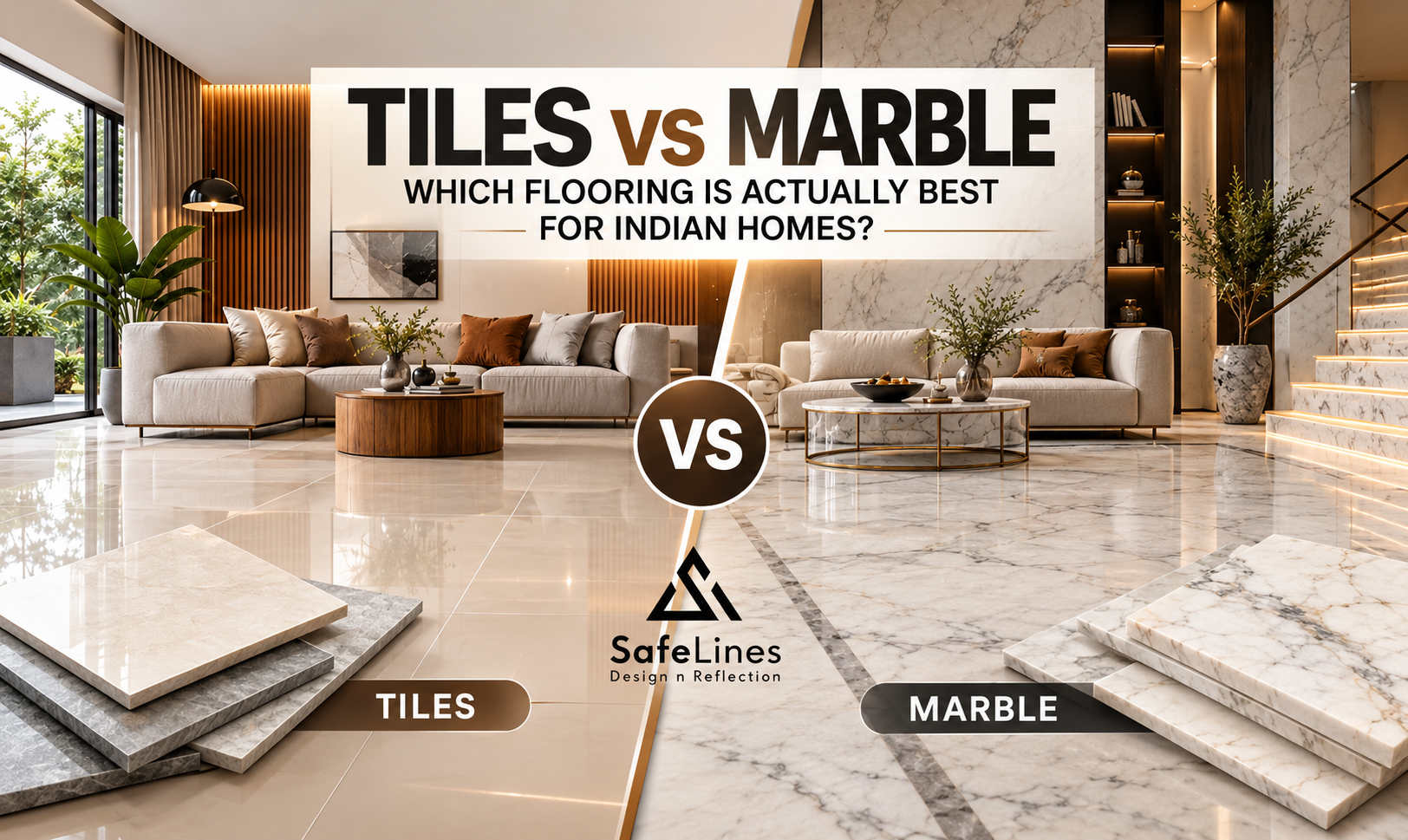
Indians and their long-standing obsession with marble flooring is nothing new. But that preference seems to be changing as modern interiors increasingly lean towards tiled flooring. With that, the tiles vs marble debate has intensified, as homeowners now have access to vitrified, ceramic, and porcelain tile options in a wide range of designs, finishes, and price points.
Marble still has a strong place in Indian homes for its natural patterns, cool feel, and distinctive stone character. But tiles offer more consistency and choices for different rooms and budgets. But which suits your home better?
A closer comparison can make that decision much easier. So, our expert team at Safelines Design n Reflection put a lot of experience and research into creating this detailed comparison that can help you make a better interior choice for your home.
Tiled Flooring for Modern Interiors
Tiles have become a common flooring choice in Indian homes because homeowners can select products based on room requirements, design preferences, and budget. For interiors, there are three main types of floor tiles available, including
Vitrified Tiles
Vitrified tiles are manufactured to have low water absorption and are available in many colours, patterns, sizes, textures, and finishes. They are commonly considered for everyday residential flooring because they are relatively easy to clean and offer a wide range of design choices.
In the vitrified tiles vs marble comparison, vitrified tiles may appeal to homeowners who want a more consistent surface and predictable design.
Ceramic Tiles
Ceramic tiles are made from clay-based materials and are available in different grades, finishes, and designs. While some are suitable for residential floors, others may be intended for walls or specific applications.
The versatile applications of ceramic tiles make specification important. It is important to note that a ceramic tile should be selected according to the area where it will be installed rather than assuming that every ceramic tile will perform in the same way.
Porcelain Tiles
Porcelain tiles are a category of dense ceramic tile with low water absorption. They can be used in residential areas where their particular specifications suit the application.
Porcelain tiles are suitable for floors in living rooms, kitchens, bathrooms, balconies, and other areas, depending on the product’s specifications and surface finish. They are also available in many designs, including stone, marble, and wood-look finishes.
Indians and Their Love for Marble Flooring
Natural marble has remained popular in Indian homes for good reason. Its natural veining, colour variations, and individual patterns give every slab a slightly different appearance. For homeowners who appreciate natural stone, this variation is something every homeowner admires.
However, marble flooring requires suitable cleaning and, depending on the stone and application, periodic polishing and sealing. It can also be sensitive to acidic substances and may stain or show surface wear if it is not cared for properly.
The marble flooring installation also requires careful slab selection, cutting, laying, joint finishing, and polishing where required.
Quick Comparison: Tiles vs Marble
| Factor | Floor Tiles | Natural Marble |
| Material type | Manufactured; includes vitrified, ceramic and porcelain | Natural stone |
| Appearance | Wide range of colours, prints, textures and finishes | Natural veining and colour variation |
| Durability | Depends on tile type, thickness, finish and installation | Depends on marble variety, thickness and installation |
| Water absorption | Vitrified and porcelain generally have low absorption | Porosity varies by stone |
| Maintenance | Routine sweeping, mopping and grout care | Cleaning, polishing and sealing where required |
| Installation | Requires proper surface preparation, adhesive/bedding and grouting | Requires skilled cutting, laying, finishing and polishing |
| Slip resistance | Depends on surface finish and product rating | Depends heavily on stone finish |
| Room suitability | Options available for living rooms, kitchens, bathrooms and balconies | Suitable for many indoor spaces with appropriate selection and care |
Tiles vs Marble: Which One Should You Choose?
The decision-making becomes easier when comparison isn’t solely based on appearance. So, we listed the most important comparison factors that matter most in an Indian home.
Aesthetic Appeal
Marble gives a floor the natural character of real stone. Its veins and colour variations are formed naturally, so even slabs from the same variety may look different.
Meanwhile, tiles provide more control over the final appearance. Homeowners can choose from plenty of colours, patterns, textures, and finishes to match a particular interior scheme. What is more interesting is that some printed tiles imitate marble, wood, or stone, although the quality and surface characteristics depend on the product.
Durability and Strength
Both tiles vs marble can perform well when the right product is selected and installed correctly. For tiles, it is important to consider factors such as product quality, thickness where relevant, intended application, and installation.
Marble flooring also varies considerably between varieties. It can scratch, chip, crack, or show surface wear depending on the stone and conditions. Good substrate preparation and workmanship is important for both.
Water Resistance and Porosity
Water absorption is an important aspect, especially in kitchens, bathrooms, balconies, and other areas exposed to moisture.
Vitrified and porcelain tiles generally have low water absorption, although grout joints still need regular attention during cleaning.
At the same time, natural marble is porous to varying degrees and may benefit from suitable sealing to reduce the risk of staining. However, sealing does not make marble completely stain-proof or waterproof.
Maintenance Requirements
Tiles usually require routine sweeping and mopping, with additional attention to grout joints when dirt builds up. The cleaning product should suit the particular tile and finish.
Marble needs more care around the use of harsh chemicals, as they can affect the surface. While regular cleaning is important, marble floors often require periodic polishing. Marble sealing may also be recommended depending on the stone and its use.
Installation and Upkeep
Marble installation is quite a lengthy process that may include slab selection, cutting, laying, joint finishing, and polishing where required. Skilled workmanship is important particularly important because natural slabs can vary in pattern and colour.
Tile installation requires proper surface preparation, suitable adhesive or bedding, correct spacing, grout application, and attention to the finished floor level. The time and cost involved can vary depending on the existing floor, installation method, area, and labour availability.
Marble may need more specialized finishing and periodic upkeep, while tiles can be simpler to maintain for many everyday applications.
Safety and Slip Resistance
Bathrooms and balconies need particular attention because of frequent water underfoot. A suitably rated or textured tile may be appropriate for such areas, while the finish of marble should also be considered carefully.
A very rough surface is not automatically the best answer either. It is important to take note of cleaning, comfort, intended use, and water exposure.
Cost Considerations
The cost of flooring in India varies considerably based on the material, quality and installation requirements. Here are estimated costs based on industry averages:
| Flooring Material | Estimated Installed Cost |
| Ceramic tiles | ₹60–₹100/sq. ft. |
| Vitrified tiles | ₹80–₹160/sq. ft. |
| Porcelain tiles | ₹105–₹190/sq. ft. |
| Natural marble | ₹180–₹290/sq. ft. |
The actual cost can change based on tile brand and size, finish, marble variety and grade, thickness, cutting, wastage, transportation, surface preparation, installation labour and local availability.
Marble may also require additional spending on polishing and sealing, both during installation and later maintenance. According to current estimates, marble polishing costs roughly ₹15–₹45 per sq. ft.
For a fair tiles vs marble comparison, it is better to consider the complete installed cost and expected maintenance rather than comparing the material price alone.
Understanding the Right Flooring for Each Room
Before making a final choice, it is important to consider what each room needs from its flooring. Here is a room-by-room look at where tiles or marble may make more sense.
Living Room
Both marble and tiles are well-suited for living rooms. Marble may suit homeowners who value natural patterns and are comfortable with periodic upkeep.
On the contrary, vitrified tiles can be useful for those looking for a consistent appearance, a particular colour scheme, or a wider selection of finishes.
Kitchen
Indian modular kitchens deal with frequent cleaning, spills, food stains, and occasional contact with oil or acidic substances. Vitrified or porcelain tiles can be practical choices for many kitchens due to their low water absorption and easy-to-clean surfaces.
Marble can also be used, but homeowners need to understand its care requirements and sensitivity to certain substances.
Bathroom
Bathrooms need flooring that suits moisture, wet feet, regular cleaning, and the risk of slipping. Anti-skid bathroom tiles can be the better choice for bathroom applications.
Marble can also be considered, but its porosity, sealing requirements, and maintenance need to be understood before installation.
Balcony
Balconies face conditions that indoor rooms do not, including rain, sunlight, drainage issues, and outdoor dirt. Tiles can work very well for balconies, especially porcelain tiles and outdoor-rated vitrified tiles that are designed for exterior use.
Marble may work for some balcony designs, but the particular stone, finish, weather exposure, and maintenance requirements should be assessed carefully.
Bedrooms and Other Indoor Spaces
Both marble and tiles can work in bedrooms depending on the desired appearance, budget, maintenance expectations, and overall interior plan.
Homeowners considering alternatives to hard stone or tile can also look at SPC flooring. However, consider whether the product and installation conditions suit the room.
Conclusion
For many Indian homes, tiles are the practical choice when design flexibility, simple routine care, and options across different budgets matter. For a homeowner who values natural veining, individual slab character, and the feel of real stone, marble flooring can be worth the additional care.
And for a strict budget, compare the complete installed cost of specific products instead of assuming every tile will cost less than every marble variety.
Still comparing options? Visit Safelines Design n Reflection or book a free consultation to compare flooring materials and find an option suited to the home’s rooms, budget, and everyday use.
FAQs
Which is Better, Marble or Tile?
Tiles can be a practical flooring option for many households that prefer modern interiors, a wider choice of designs, and easier day-to-day maintenance, while marble can appeal to homeowners who prefer natural stone. Budget, room usage, appearance, and maintenance expectations should guide the decision.
Which is More Slippery, Marble or Tiles?
Neither is automatically more slippery. Polished marble and glossy tiles can both become slippery when wet. The surface finish, product specifications, and intended application matter, especially in bathrooms and balconies.
Which is More Costly, Tiles, Marble or Granite?
Costs vary widely across all three. Ceramic, vitrified, and porcelain tiles have different price ranges, while marble and granite vary by variety, quality, finish, and availability. Installation and finishing costs should also be included.
What are the Disadvantages of Marble?
Marble can be sensitive to acidic substances, staining, scratches, and surface wear. Natural colour variation can also make uniformity harder to achieve. Skilled installation, periodic polishing, and sealing may add to its upkeep.
Is Marble or Vitrified Tile Better for Indian Summers and Humidity?
Both can feel cool underfoot, but comfort also depends on indoor temperature, sunlight, and ventilation. Vitrified tiles generally have low water absorption, while marble’s porosity and sealing needs should be considered in humid or moisture-prone areas.