
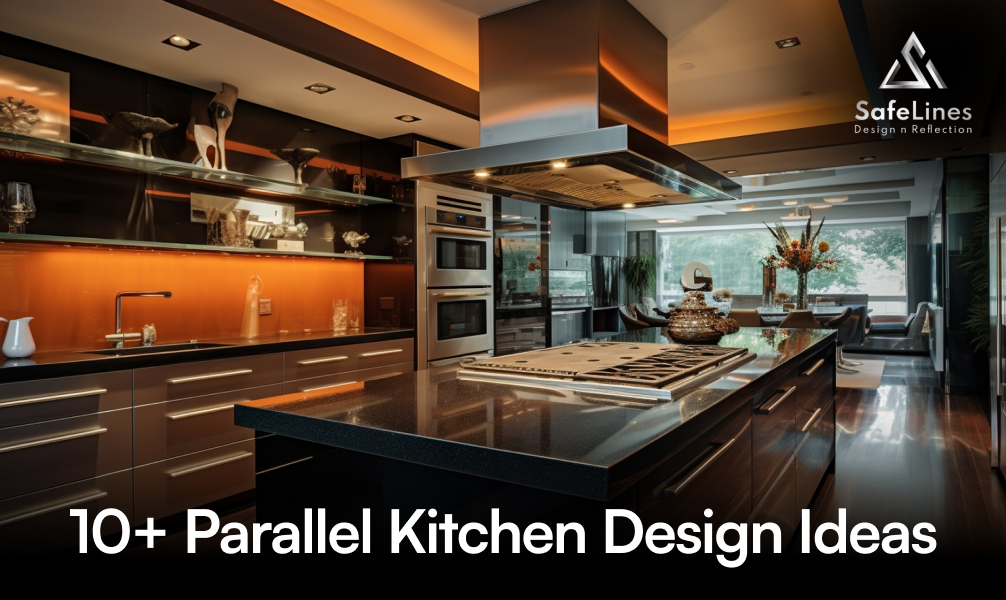
Parallel Kitchen designs are in trend these days, and the reasons behind their growing popularity aren’t any secret but simplicity. Typical Indian kitchens don’t have the wide-open layouts, unlike Western ones. The kitchens are usually compact or mid-sized, where every inch matters.
A parallel kitchen layout makes more practical sense. Two counters facing each other, allowing smooth movement and a clean work triangle that actually works according to Indian conditions.
So, if you are considering a parallel kitchen but are confused or out of ideas for the design, let us help you choose the best one. We have featured the top 11 parallel kitchen design layouts you can get inspired by in 2026.
What is Parallel Kitchen Design?
Parallel Kitchen Design, often called a galley kitchen design or two-wall kitchen design, places two counters opposite each other with a walking aisle in between. Cabinets and appliances align along both walls. The format looks simple, but the spacing decides whether the kitchen feels efficient or cramped.
In Indian kitchen layout planning, the kitchen work triangle, sink, stove, and refrigerator naturally fit into this arrangement. The layout works particularly well in rectangular rooms where the width ranges between 7 and 10 feet.
Top Design Ideas for Parallel Kitchens
Here’s a curated selection of top parallel kitchen design ideas:
1). The Minimalist Parallel Kitchen
A minimalist parallel kitchen design has a way of calming narrow spaces. Flat shutters, muted laminates, and restrained detailing reduce visual pressure between the two counters. In compact apartments, this makes a noticeable difference. The aisle feels more open, even when the dimensions are tight.
The absence of excessive grooves, frames, or ornamental elements also simplifies cleaning. Oil residue does not settle into detailing. Surfaces wipe down faster. In daily-use kitchens, this quiet simplicity holds up well over time.
When paired with a balanced parallel kitchen layout, the result feels organised without looking heavy. There is clarity in the movement between the sink and stove, and the overall look stays steady even after years of regular cooking.
2). High-Gloss Gray Parallel Kitchen
High-gloss gray brings a sharp, urban character to a modern parallel kitchen. The reflective surface brightens the aisle and works well alongside steel appliances and granite countertops. It gives the two-wall kitchen design a crisp edge without making it feel overly bright.
Gray tones tend to age better than pure whites. They mask minor surface marks and maintain their tone under everyday kitchen exposure. In well-ventilated spaces, the gloss retains its smooth finish for years.
Within a structured parallel kitchen layout, gray finishes provide a balanced visual anchor. The space feels contemporary without becoming overpowering, and the clean lines complement rectangular room proportions effectively.
3). Two-Tone Parallel Layout
A two-tone parallel modular kitchen introduces contrast without disrupting the linear structure of the layout. Darker tones below and lighter tones above create a grounded feel while keeping the upper portion visually light.
This subtle shift in shade helps break the monotony between the two counters. It brings depth to a galley kitchen design without complicating the overall look. The visual layering works particularly well in Indian kitchen layouts where cabinetry stretches across long walls.
Over time, this combination remains steady because it does not rely on bold or experimental colors. The design feels balanced, and that balance translates into lasting visual comfort.
4). Rustic Farmhouse Charm in Parallel Format
Rustic textures soften the structured geometry of a two-wall kitchen design. Wood-grain laminates, matte finishes, and slightly warm undertones introduce familiarity into the space.
In a parallel kitchen layout, these textures reduce the corridor-like feel that sometimes appears in narrow rooms. The warmth counteracts the straight lines and gives the kitchen a welcoming presence.
Natural-looking finishes also blend well with Indian cooking environments. They hide minor wear gracefully and continue to look comfortable rather than polished. The result feels lived-in without appearing worn.
5). Monochromatic Magic
A monochromatic approach creates continuity across both walls of a parallel kitchen layout. When cabinets and surfaces stay within a single color family, the aisle appears broader and more seamless.
This visual consistency helps in compact kitchen design setups where too many color breaks can create clutter. Light-toned monochromes reflect artificial lighting evenly and maintain clarity across the workspace.
The simplicity of one dominant shade allows the structure of the galley kitchen design to stand out on its own. The space feels composed and stable, which is often appreciated in everyday cooking environments.
6). Warm Wooden Textures
Wooden textures continue to find a place in Indian kitchen layout planning because they feel familiar and grounded. In a parallel modular kitchen, wood tones add depth without overpowering the room.
When used thoughtfully, they prevent the two walls from appearing stark or clinical. The warmth balances stone countertops and metal appliances naturally.
Over time, textured laminates maintain their character. Minor usage marks blend into the grain pattern rather than standing out. In daily-use kitchens, that subtle resilience becomes noticeable.
7). High-Gloss White with Reflective Surfaces
High-gloss white remains a common choice in modern parallel kitchen installations for its ability to amplify light. In narrow spaces, the reflective finish expands the visual width.
The brightness helps maintain clarity across the two counters, especially in apartments where natural light is limited. When paired with good ventilation, the surface retains its sheen and keeps the space feeling open.
Within a structured parallel kitchen design, glossy white creates a clean backdrop that supports stainless steel fittings and darker countertops without visual conflict.
8). Natural Oak and White Simplicity
Combining oak textures with white cabinets brings a quiet contrast to a parallel kitchen layout. The wood tones anchor the lower half of the space, while white overhead cabinets maintain openness.
This pairing works comfortably in Indian homes because it feels neither overly decorative nor overly minimal. It strikes a middle ground that adapts well to everyday cooking activities.
Over time, the natural contrast continues to look balanced. The space does not feel dated quickly because the tones remain neutral and adaptable.
9). Floating Shelves with Lower Cabinets
Introducing floating shelves on one wall of a parallel kitchen softens the closed-in feel that sometimes develops between two full cabinet runs. The open sections break visual heaviness and introduce breathing space.
When combined with base cabinets, the layout maintains storage while allowing certain sections to remain lighter in appearance. The overall structure still respects the two-wall kitchen design but feels less enclosed.
This approach brings subtle openness without disturbing the straight workflow that defines a parallel kitchen layout.
10). Black and White Contrast Classic
Black base cabinets paired with white overhead units create a strong visual rhythm in a galley kitchen design. The darker lower section grounds the space, while the lighter upper portion keeps it from feeling compressed.
The contrast defines each wall clearly, which can enhance the structured nature of a parallel modular kitchen. The lines appear sharper, and the rectangular layout feels intentional.
Over time, this combination retains its clarity because it relies on neutral shades rather than shifting color trends.
11). Ceiling-Height Cabinetry
Extending cabinetry up to the ceiling enhances the vertical dimension of a parallel kitchen layout. The additional height strengthens the sense of structure along both walls.
In compact apartments, this creates a complete and cohesive look. The walls feel finished rather than segmented. The extra storage integrates seamlessly into the two-wall kitchen design.
The visual continuity from floor to ceiling gives the space a disciplined character. In Indian kitchen layouts where storage demand is consistent, this approach maintains order without altering the core layout.
Which Parallel Kitchen Designs Are Trending in 2026?
Across urban apartments, demand leans toward neutral tones with durable matte finishes. Gloss remains present but mostly in controlled zones. Matte finishes are being chosen more often than high gloss, especially near hob walls.
Deep drawer systems continue to replace traditional shutter-and-shelf formats. Wider tandem drawers with internal partitions are now seen more frequently in parallel modular kitchen installations.
Ceiling-height cabinetry is also rising in demand, particularly in compact flats where storage pressure builds quickly. Instead of adding external storage units later, homeowners are planning vertical storage from the beginning.
The parallel kitchen layout itself is not new. What is changing is the detailing, stronger hardware selection, better chimney planning, more disciplined aisle spacing, and moisture-resistant boards near sink areas. The demand is moving toward kitchens that remain stable after real use.
Conclusion
Parallel Kitchen Design continues to remain dependable in Indian homes because it respects rectangular room proportions and supports structured workflow. When aisle spacing is correct, ventilation is addressed early, and material selection matches Indian cooking realities, the parallel kitchen layout performs consistently over time.
Designing such kitchens requires execution awareness. Safelines approaches kitchen layouts with this ground-level understanding of real Indian homes, focusing on proportion, durability, and practical storage from the start.
FAQs
How to Organize a Parallel Kitchen?
Assign one wall for washing and prep, the other for cooking and storage. Maintain clear aisle spacing. Use deep drawers for heavy utensils. Keep frequently used items within arm’s reach.
Which is Better Parallel Kitchen or L Shape Kitchen for Indian Homes?
Parallel layouts work better in rectangular rooms. L-shaped kitchens suit square layouts. The room dimension usually decides the outcome more than preference.
Is a Parallel Kitchen Design Efficient?
Yes, when the spacing between counters is adequate, and the kitchen work triangle is balanced.
What are the Benefits of a Parallel Kitchen?
The advantages of a parallel kitchen includes cear zoning, efficient movement, reduced corner wastage, and structured storage planning within compact spaces.