

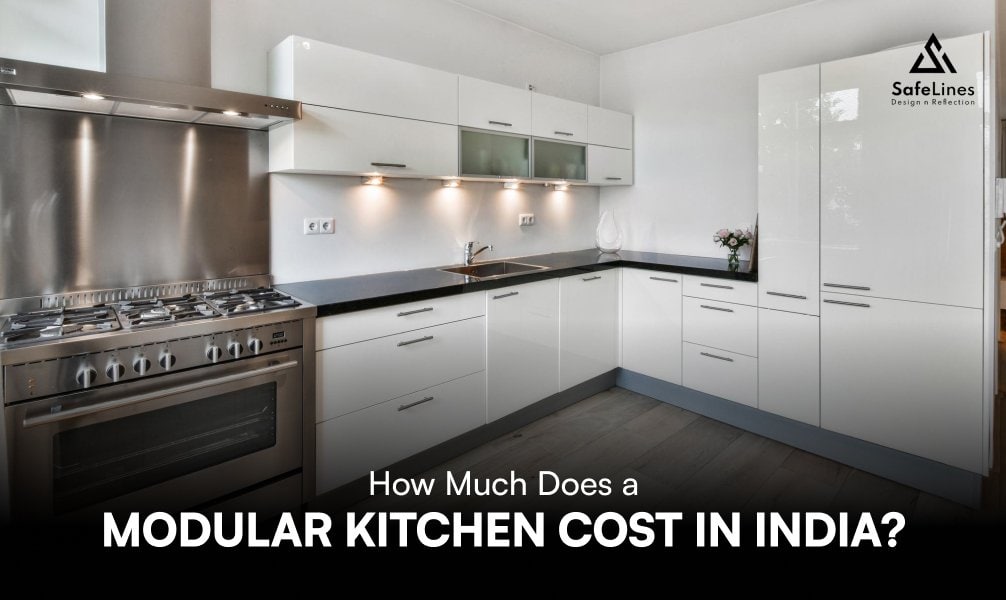
The shift from carpenter-made kitchens to modular systems clearly exemplifies how Indian homeowners have started to embrace modern living. However, the modular kitchen cost remains the biggest confusing factor for homeowners. Where one contractor quoted ₹1.8 lakh for a kitchen, another gave an estimate close to ₹4 lakh for a similar layout. So, what’s really changed?
The biggest confusion around modular kitchen cost in India comes from one common misconception that every modular kitchen is the same product. A kitchen made with MDF and basic hinges is undoubtedly different compared to one built using marine plywood, premium channels, and moisture-resistant finishes.
The practical budgeting requires understanding where money actually goes during execution. Through this guide, we will estimate the average modular kitchen cost, alongside discussing the factors affecting the price and how to save without compromising.
Why are Modular Kitchens in High Demand in India?
Over the last few years, we have seen an exponential demand for modular kitchens, especially in urban apartments where kitchen space has become more compact. The traditional carpenter-made kitchens often struggle with storage organization, corner accessibility, and maintenance convenience. Modular kitchens solve many of these practical issues through structured cabinet designs, planned storage zones, and better space utilization.
Modular layouts help maximize available space through overhead cabinets, tandem drawers, pull-out systems, and corner units. Even smaller kitchens can accommodate groceries, cookware, utensils, and appliances more efficiently when storage planning happens properly.
Maintenance convenience is another factor that adds to its popularity. Factory-finished shutters, laminated surfaces, and organized cabinet systems remain easier to clean compared to traditional carpentry work with uneven finishing. Modern modular systems also allow partial replacements if individual shutters or accessories get damaged later.
Average Modular Kitchen Cost: Quick Comparison
| Kitchen Category | Approximate Cost Range | Material Used | Hardware Quality | Suitable For |
| Budget Kitchen | ₹80,000 – ₹1.5 Lakh | MDF / Standard Plywood | Basic Hinges & Channels | Small apartments and rental homes |
| Mid-Range Kitchen | ₹1.5 Lakh – ₹3 Lakh | HDHMR / BWP Plywood | Soft-close Hardware | Most urban Indian households |
| Premium Kitchen | ₹3 Lakh – ₹5 Lakh+ | Marine Plywood / Premium Boards | Imported Hardware & Accessories | Luxury apartments and villas |
| Luxury Kitchen | ₹5 Lakh – ₹10 Lakh+ | Marine Plywood with Acrylic or PU Finishes | Premium Imported Systems | Fully customized kitchens |
What is the Cost for Modular Kitchen in India?
The actual cost of a modular kitchen in India is not fixed and fluctuates with requirements, material choice, and aesthetic appeal. However, we can estimate the average cost based on different aspects, including
Basic Price Range Based on Size
The cost of a modular kitchen in India usually starts around ₹80,000 to ₹1.2 lakh for compact kitchens using basic materials and standard hardware. Mid-sized kitchens commonly range between ₹1.5 lakh and ₹3 lakh, depending on cabinet volume, finish quality, countertop selection, and storage accessories. However, larger kitchens with premium finishes, island counters, integrated appliances, and advanced hardware systems can easily cross ₹5 lakh.
Small kitchens generally require fewer cabinets and lower hardware quantities, while large kitchens often involve more complex layouts, appliance integration, tall units, and premium finishes, which substantially raise the modular kitchen cost estimate.
Cost Per Square Foot
Most contractors calculate the modular kitchen cost per sq ft to simplify pricing discussions. Basic modular kitchens usually start around ₹1,200 to ₹1,800 per sq ft, while mid-range kitchens commonly fall between ₹2,000 and ₹3,500 per sq ft. Premium kitchens with imported hardware, acrylic or PU finishes, and advanced accessories may cross ₹5,000 per sq ft.
However, square foot pricing alone rarely gives a complete picture. Two kitchens with identical dimensions can have very different costs depending on storage density, drawer count, appliance integration, and material quality.
Here are some practical modular kitchen cost averages based on commonly seen kitchen sizes in Indian homes:
| Kitchen Size | Layout Type | Estimated Cost Range |
| 8×6 ft | Straight Kitchen | ₹80,000 – ₹1.2 Lakh |
| 10×10 ft | L-Shaped Kitchen | ₹1.5 Lakh – ₹2.8 Lakh |
| 12×10 ft | Parallel Kitchen | ₹2 Lakh – ₹3.5 Lakh |
| 14×12 ft | U-Shaped Kitchen | ₹3 Lakh – ₹5 Lakh |
| 15×15 ft | Island Kitchen | ₹5 Lakh+ |
Budget vs Luxury Kitchen Pricing
Budget modular kitchens mainly focus on functional storage using economical materials like MDF or basic plywood with laminate finishes. These kitchens generally meet basic storage and utility needs without advanced customization.
Meanwhile, luxury kitchens increase modular kitchen cost through premium materials, imported hardware systems, advanced finishes, integrated lighting, hidden storage solutions, and appliance coordination. HDHMR boards, marine plywood, acrylic shutters, PU coatings, and stainless-steel systems are commonly used in higher-end projects.
Factors That Affect Modular Kitchen Cost in India
The modular kitchen cost is generally impacted by a number of factors that mainly include
Kitchen Size
Kitchen size directly influences modular kitchen cost because cabinet quantity, countertop length, hardware count, and finishing requirements all increase with larger spaces. Bigger kitchens require more shutters, drawers, handles, channels, and internal storage systems. Material consumption rises significantly even before premium upgrades begin.
Kitchen Layout
Layout selection changes both usability and the modular kitchen cost estimate. Straight and L-shaped kitchens generally remain more economical because they involve fewer corners and simpler execution.
Parallel kitchens increase storage capacity but require balanced movement space between counters. At the same time, U-shaped kitchens usually cost more due to additional cabinet length and corner hardware systems. Island kitchens create the highest pricing impact because they demand extra cabinetry, countertop area, electrical provisions, and circulation planning.
Cabinet Core Materials
Material selection remains one of the biggest contributors to modular kitchen cost. MDF kitchens offer lower initial pricing but struggle with long-term moisture exposure, especially near sinks and heavy cooking zones.
HDHMR boards perform better against moisture and surface impact, making them suitable for mid-range modular kitchens. Marine plywood and BWP plywood continue to remain highly preferred for Indian kitchens because they tolerate humidity and daily usage more effectively.
Kitchen Finish
Finishes significantly affect both appearance and the modular kitchen cost per sq ft. Laminates are undoubtedly one of the economical choices for Indian households because they handle scratches, cleaning, and daily usage reasonably well.
Acrylic finishes create a premium glossy appearance but increase costs considerably. They also require more careful maintenance because scratches become visible faster. Meanwhile, PU finishes deliver smooth luxury aesthetics but involve closer execution precision and maintenance attention.
Hardware and Accessories
Hardware quality directly determines how a modular kitchen performs after years of daily use. Basic hinges and channels may reduce initial modular kitchen cost, but may require frequent replacements under heavy Indian cooking usage.
Premium soft-close hinges, tandem drawers, and lift-up systems improve convenience and movement smoothness. However, they also increase the budget substantially, especially in larger kitchens with many drawers and overhead cabinets.
Countertops
Granite remains one of the most practical choices for typical Indian kitchens because it handles heat, heavy utensils, and regular cooking efficiently. It also offers strong durability at a reasonable price.
Marble creates an elegant appearance but stains more easily in active cooking spaces. Oil marks, masala spills, and acidic ingredients gradually affect marble surfaces if sealing remains inconsistent.
At the same time, quartz countertops increase the modular kitchen cost further but provide cleaner finishes, better stain resistance, and uniform patterns.
Kitchen Appliances
Integrated appliances substantially increase modular kitchen cost estimates because cabinet dimensions require precise customization. Chimneys, built-in ovens, microwaves, and dishwashers demand planned electrical points, ventilation arrangements, and supporting cabinet structures.
Many homeowners initially exclude appliance costs from budgeting discussions and later face major increases during execution. Refrigerator integration panels, tall oven units, and concealed microwave spaces also add material and hardware expenses.
Civil Work and Additional Charges
Civil modifications quietly increase the kitchen cost in many Indian homes. Electrical shifting for chimneys, microwaves, ovens, and lighting often involves concealed rewiring. Plumbing relocation near sinks or dishwashers can create additional labour and tile repair expenses.
Backsplash upgrades, wall tiling, false ceiling, decorative lighting, profile lights, and under-cabinet LED systems also increase execution costs gradually.
Many quotations exclude these supporting expenses initially, which creates confusion later. Proper modular kitchen cost estimates should always include electrical, plumbing, civil adjustments, and finishing work together rather than focusing only on cabinet pricing.
How to Reduce Modular Kitchen Cost Without Compromising Quality?
We Indians are bargain hunters by nature, always looking for smart ways to save without compromising on value. Keeping that in mind, here are some practical cost-saving tips for modular kitchens:
Choose Practical Layouts
Simple layouts usually provide better value than complicated designs in Indian apartments. L-shaped and parallel kitchens often deliver efficient movement and storage without requiring excessive corner hardware or expensive customizations. Large islands and decorative structures increase modular kitchen cost rapidly, while sometimes reducing practical circulation space.
Use Laminates Instead of Expensive Finishes
Laminate finishes help control modular kitchen cost without affecting basic functionality. Good-quality laminates handle Indian cooking conditions reasonably well and remain easier to maintain over time compared to delicate, glossy finishes.
Avoid Unnecessary Accessories
Many display kitchens include accessories that rarely get used efficiently in regular households. Imported pull-outs, decorative organizers, and advanced corner systems often increase budgets without improving practical storage significantly.
Compare Multiple Quotations
Modular kitchen pricing varies heavily between contractors, local carpenters, and branded companies. Comparing quotations helps identify hidden exclusions related to countertops, hardware brands, electrical work, transportation, and installation.
Low estimates sometimes use thinner boards, weaker channels, or poor edge banding quality. Proper comparison should examine material specifications, hardware warranties, board thickness, and installation details instead of comparing only total pricing figures.
Prioritize Storage Planning
Poor storage planning creates expensive modifications later. Deep cabinets without organizers, inaccessible corners, and insufficient drawer space reduce kitchen usability despite higher spending. Practical planning identifies actual storage needs before production begins.
Carpenter vs Modular Kitchen Comparison: Which is Better for Indian Homes?
Local carpenter kitchens usually offer lower upfront pricing and greater flexibility during execution. Design adjustments can happen directly on-site, and custom modifications also become easier during installation.
However, finishing consistency often varies depending on the carpenter’s skill and supervision quality. Delays remain common because complete fabrication happens at the site itself. Dust, noise, and polishing work may continue for weeks in occupied homes.
At the same time, branded modular kitchens focus heavily on factory precision and standardized production quality. Machine-finished shutters, accurate edge banding, and structured hardware installation usually create a cleaner final execution.
Installation timelines remain faster because most fabrication is completed before site delivery. Warranty support and replacement systems also improve convenience for many homeowners. Premium hardware integration becomes more reliable in factory-manufactured kitchens.
Conclusion
Modular kitchen cost in India covers a wide range, and every rupee of that range is impacted by material choices, layout decisions, hardware quality, and civil work that most homeowners do not account for at the start. The cheapest quote rarely delivers what the homeowner imagined, and the most expensive quote does not always represent the best value.
Getting the kitchen right requires understanding what each component contributes to daily functionality and long-term durability, not only what looks good in a showroom. Homeowners who take the time to compare materials, evaluate hardware quality, and plan civil work end up with better kitchens at better prices. Safelines’ modular kitchen solutions bring this kind of practical, experience-backed guidance to every project, which ensures that every decision fits within the homeowner’s actual needs.
FAQs
How Much Does a Small Modular Kitchen Cost for 10×10?
A small modular kitchen generally costs between ₹80,000 and ₹1.5 lakh, depending on material quality, hardware selection, countertop type, and storage planning.
Which Material is Best for Indian Kitchens?
Marine plywood and BWP plywood remain among the most reliable materials for Indian kitchens because they handle moisture, heat, and heavy daily usage effectively. HDHMR also performs well in many households. MDF usually works better for low-moisture areas and budget-focused projects.
Which Modular Kitchen Finish Lasts Longest?
Good-quality laminates generally offer strong long-term durability for Indian cooking conditions. They resist scratches, stains, and daily cleaning reasonably well.
Are Modular Kitchens Expensive to Maintain?
Maintenance costs mainly depend on material and hardware quality. Well-built modular kitchens with durable hinges, proper edge banding, and moisture-resistant boards usually require limited maintenance for years. Poor-quality hardware and low-grade finishes often create repair expenses much earlier.
What is the Cheapest Modular Kitchen Option?
Basic laminate kitchens using MDF or standard plywood with simple hinges and shelf storage remain among the most affordable modular kitchen options. Straight or L-shaped layouts also help reduce execution costs because they require fewer custom fittings and corner accessories.