

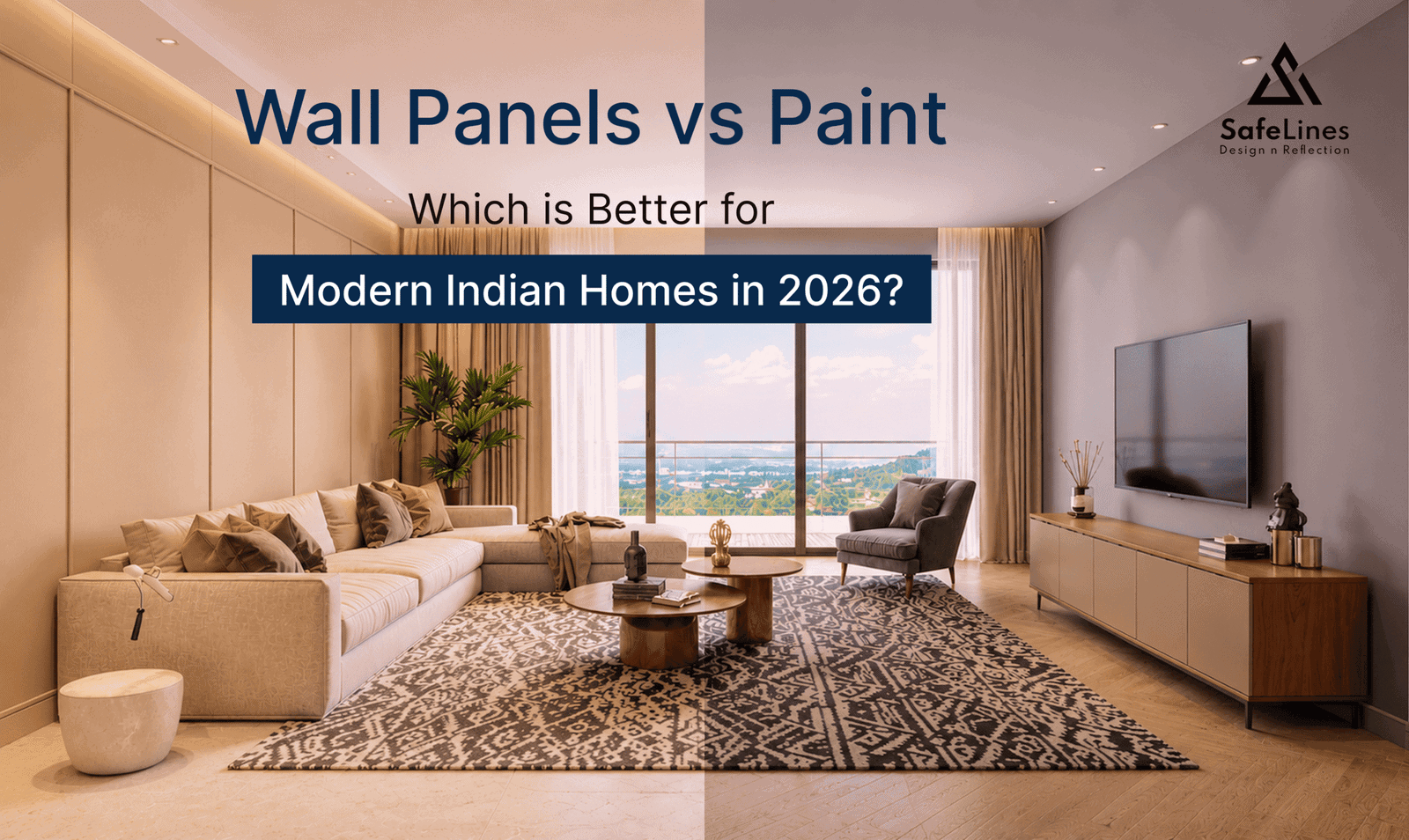
Whether it is about building a new house or renovating the existing one, homemakers are often bombarded with hundreds of decisions. And choosing the right wall finish is a decision that further adds to the confusion. You still want that traditional wall paint, but your children prefer something aesthetic like wall panels. This creates confusion around choosing between wall panels vs paint.
Typical Indian homes don’t just need aesthetic wall solutions but practical ones that withstand daily wear, changing weather conditions, humidity, dust, and accidental strain. As wall finishes take a significant portion of the entire building or renovation budget, they should be durable, practical, maintainable, while being visually appealing.
This guide will compare both wall panels vs paint options across the factors that matter most to modern Indian homeowners. By the end of this guide, you will better understand which option is better suited to different spaces, lifestyles, and home improvement goals.
Understanding the Trendy Interior Wall Finish Options
Although wall finish options in India are many, we have listed the top 3 that are trending nowadays and offer better ROI.
Wall Panels
Wall panels took no time to become the trendiest wall finish options for modern Indian homes. The best thing about wall panels is the availability of different materials, including PVC, WPC, MDF, laminate, and decorative composite panels.
Among these, PVC wall panels remain particularly popular because they offer durability, moisture resistance, and relatively simple installation. The wall panels are low-maintenance wall solutions that require occasional cleaning. They are less prone to minor scratches and daily wear.
Wall Paints
Wall paints have long been part of Indian homes, which offer flexibility, affordability, and an unlimited range of colour choices. At the same time, there is no dearth of wall paint options. These include distemper, emulsion paints, washable paints, luxury emulsions, and textured finishes.
Customization remains the strongest advantage for wall paint, as homeowners can experiment with different shades, textured finishes, geometric accents, and creative colour combinations without major renovation works. However, wall painting is highly prone to scratches, stains, moisture marks, and fading, which may require frequent touch-ups or repainting.
Wallpapers
Wallpapers are another popular choice for modern Indian homes. They provide better design possibilities than standard paints often can not replicate, including prints, 3D visual effects and intricate textures.
They are especially perfect for bedrooms, dining areas, and feature walls. However, wallpapers still face practical challenges in typical Indian conditions. They are highly prone to damage due to high humidity, moisture exposure, and wall dampness.
Side-by-Side Comparison Between Wall Panels vs Paint
| Factor | Wall Panels | Wall Paint |
| Initial Cost | ₹80-₹600+ per sq ft (depending on material, design, and installation) | ₹15-₹60 per sq ft (depending on paint quality and finish) |
| Long-Term Cost | Generally lower due to minimal maintenance and no repainting cycles | Higher over time due to touch-ups and repainting every few years |
| Durability | Generally lasts longer | Subject to fading, peeling, and scratches |
| Maintenance | Simple cleaning with minimal upkeep | Requires touch-ups and repainting |
| Water Resistance | Strong, especially PVC-based options | Vulnerable to moisture damage |
| Installation Time | Faster in many renovation projects | Requires surface preparation and drying |
| Impact Resistance | Better resistance to minor impacts | More susceptible to dents and marks |
| Property Value Contribution | Often creates a premium appearance | Standard market expectation |
| Typical Lifespan | 10–20+ years | 4–7 years before major repainting is often needed |
Wall Panels vs Wall Paint: Detailed Comparison
Below, we have compared wall paint vs wall panel to hlp homeowner choose a practical wall solution rather than going for trends:
Cost
Cost is undoubtedly the biggest decisive factor for typical Indian homeowners comparing Wall Panels vs Paint. While wall paint may appear to be a more affordable option because of lower material and labour costs, the long-term expenses of frequent touch-up and repainting often increase the overall cost. The cost of wall paint typically ranges between ₹15 and ₹60 per sq. ft, but it greatly depends on the paint quality and finish selected.
Although wall panels are more expensive than paint, this higher upfront investment often delivers better long-term value. The average PVC wall panels price per sq. ft. generally ranges from ₹80 to ₹250, while premium decorative wall panels can cost ₹250 to ₹600 or more per sq. ft., depending on design, thickness, finish quality, and installation requirements.
Durability and Maintenance
Durability and maintenance remain the most practical factors in choosing the best wall finish for homes. The walls in Indian homes are prone to frequent scratches from moving furniture, fingerprints near switches, accidental spills, children’s drawings, and general wear. Even high-quality paints eventually show signs of aging, particularly in areas that experience frequent use.
In this sense, wall panels generally deliver the best value as they are durable enough to resist daily wear and tear, strains, scratches and minor impacts. Additionally, they don’t need regular cleaning; just a wipe with a damp cloth does the task.
Aesthetics and Customization
Although practicality is a big decisive factor, we can’t ignore the visual appeal. Undoubtedly, wall paint offers remarkable flexibility in choosing different colour combinations, different shades, textures, patterns and accent treatment, providing a room for both the best aesthetic and customization.
Wall panels takes aesthictcs approach to the next level. Rather than depending on the colour solely, they offer depth, texture and dimension to the walls. Wood-inspired finishes, stone effects, marble patterns, fluted designs, and contemporary geometric styles create a more layered appearance that paint alone often cannot replicate.
Installation Process
The installation process can greatly impact the renovation timelines and labour costs. Painting is a long process that requires several preparation stages before final finishes. These include wall cleaning, putty work, sanding, priming, and multiple coats of paint. The drying time between coats further extends the process.
Wall panels are fast and relatively simple to install. Since panels cover the wall surface, minor imperfections can remain hidden beneath the installation.
Water, Moisture, and Insulation
The walls in Indian homes go through a variety of environmental conditions. While wall paints work adequately under normal indoor conditions, they are more prone to damage due to dampness, moisture, and temperature fluctuations, which may result in peeling, bubbling, discoloration, and patchy surfaces.
Many modern wall panels, especially PVC-based wall solutions, are highly resistant to moisture and humidity. This makes them suitable for spaces where walls frequently encounter environmental stress. Although wall panels cannot solve structural seepage problems, they generally withstand surface moisture better than painted finishes.
Practicality for Typical Indian Homes
Practicality often decides whether a wall finish will work long-term. Paint remains a practical choice for rental properties and for owners who frequently change interior colours. Its affordability makes it relevant across a wide range of residential projects.
Meanwhile, wall panels provide practical advantages in terms of durability and low maintenance. Their resistance to strains, ability to maintain appearance and ease of cleaning are something a typical Indian homeowner always wants.
Property Value and ROI
Interior finishes influence how a property is perceived by visitors, buyers, and potential tenants. Wall paint upholds property value by keeping interiors visually appealing and clean. However, this advantage often depends on periodic repainting and continued maintenance.
The structured appearance, textured finishes, and contemporary styling of wall panels often create a more premium impression. Buyers increasingly associate decorative wall panels with modern interior upgrades, particularly in living rooms and entertainment spaces.
Popular Wall Paint Designs in Modern Homes
The modern wall paint is totally different from how it used to be, like 10 years ago. People are now leaning towards a wall paint colour combination, creative finishes and design techniques to add character to the walls. This has led to the rise of several wall paint design trends that include –
- Textured Paints: Best for feature walls in living rooms and bedrooms.
- Geometric Patterns: Preferred choice to highlight specific areas such as television walls, study corners, or dining spaces.
- Accent Walls: Perfect for creating balance while adding personality to the room.
- Neutral Colour Palettes: Shades of beige, cream, greige, and soft grey work well across different furniture styles and décor preferences.
Why Living Room Wall Panels are Becoming So Popular?
Living rooms are the most attention-grabbing spaces of the entire house. They are always at the top of the list during interior planning or renovation. As the place where families spend time together and guests are welcomed, the living room should feel comfortable, inviting, and visually appealing. And wall panels seem to complete the purpose.
The growing popularity of feature walls has also added to the demand for wall panels for living room. Instead of relying solely on paint, homeowners are now experimenting with a combination of wall panels to create visual depth behind television units, sofas and entertainment areas.
The trending wall panel design ideas, such as wood-look panels, fluted designs, marble-inspired finishes, and contemporary geometric patterns, create a more structured and premium appearance around entertainment spaces.
Wall Panels vs Wall Paint: The Verdict
The Wall Panels vs Paint discussion does not have a universal answer because every home has different requirements. Paint is a practical option for typical Indian homes seeking lower upfront costs, flexibility to change and customize colours and simple renovations. It is probably the best option for rental properties, budget-conscious projects, and homeowners who enjoy refreshing interiors every few years.
At the same time, wall panels address several challenges, such as frequent repainting, surface damage, moisture-related issues, and the gradual fading of walls over time, all while adding a visual aesthetic and modern look to the space.
Conclusion
As said above, the Wall Panels vs Paint debate rarely has a single answer because every home has different priorities. As Indian interiors are increasingly prioritizing solutions that combine aesthetics with practicality, many homeowners now view wall panels as a practical investment rather than a decorative upgrade.
Still confused? Seeking expert guidance can make the decision much easier. At Safelines Design N Reflection, homeowners can explore a wide range of wall panel designs, materials, and finishes while receiving personalized recommendations based on their space, style preferences, and budget. With the right guidance, choosing a wall finish becomes less about following trends and more about finding a solution that delivers lasting value for your home.
FAQs
Is Wall Panel Better than Paint?
Wall panels and paint serve different needs, but wall panels often perform better in terms of durability, maintenance, and long-term appearance. They resist stains, scratches, and daily wear more effectively than painted surfaces.
What are the Disadvantages of Wall Paint?
Wall paint can fade, stain, chip, or develop scratches over time, especially in high-traffic areas. Moisture exposure may also lead to peeling or discoloration. Painted walls often require periodic touch-ups and complete repainting after a few years, which increases maintenance efforts and long-term ownership costs.
Is Wall Panelling Cheaper than Paint?
Paint is usually cheaper during initial installation. Standard interior paint work may range from ₹15 to ₹60 per sq. ft., while decorative wall panels can range from approximately ₹80 to ₹600+ per sq. ft., depending on material and design. However, wall panels often reduce future maintenance and repainting expenses.
What are the Latest Wall Panel Trends?
Fluted panels, wood-finish panels, marble-look surfaces, geometric designs, acoustic panels, and minimalist textured finishes are among the most popular wall panel trends. Homeowners increasingly use these designs for television walls, living rooms, bedrooms, and entrance areas to create a more contemporary interior appearance.
What Should I Look for When Choosing a Wall Panel?
Before choosing a wall panel, homeowners should evaluate material quality, moisture resistance, durability, design suitability, installation method, maintenance requirements, and warranty support. They should also consider room usage, climate conditions, and long-term maintenance expectations before selecting a particular wall panel system.
Are PVC Wall Panels Suitable for Indian Weather?
Yes, PVC wall panels perform well in many Indian climates because they resist moisture, humidity, and everyday wear. They are commonly used in apartments and independent homes where homeowners want a durable wall finish that requires minimal maintenance and cleaning.
How Long Do Wall Panels Typically Last?
The lifespan depends on material quality and installation standards. Good-quality wall panels can often last 10 to 20 years or even longer with proper care. Their durability is one reason many homeowners consider them a long-term investment rather than a temporary decorative solution.
Can Wall Panels Be Installed Over Existing Walls?
In many cases, yes. Professional installers can often fit wall panels over existing wall surfaces if the underlying structure remains stable. This can reduce renovation time and minimize the preparation work typically required before repainting damaged walls.