

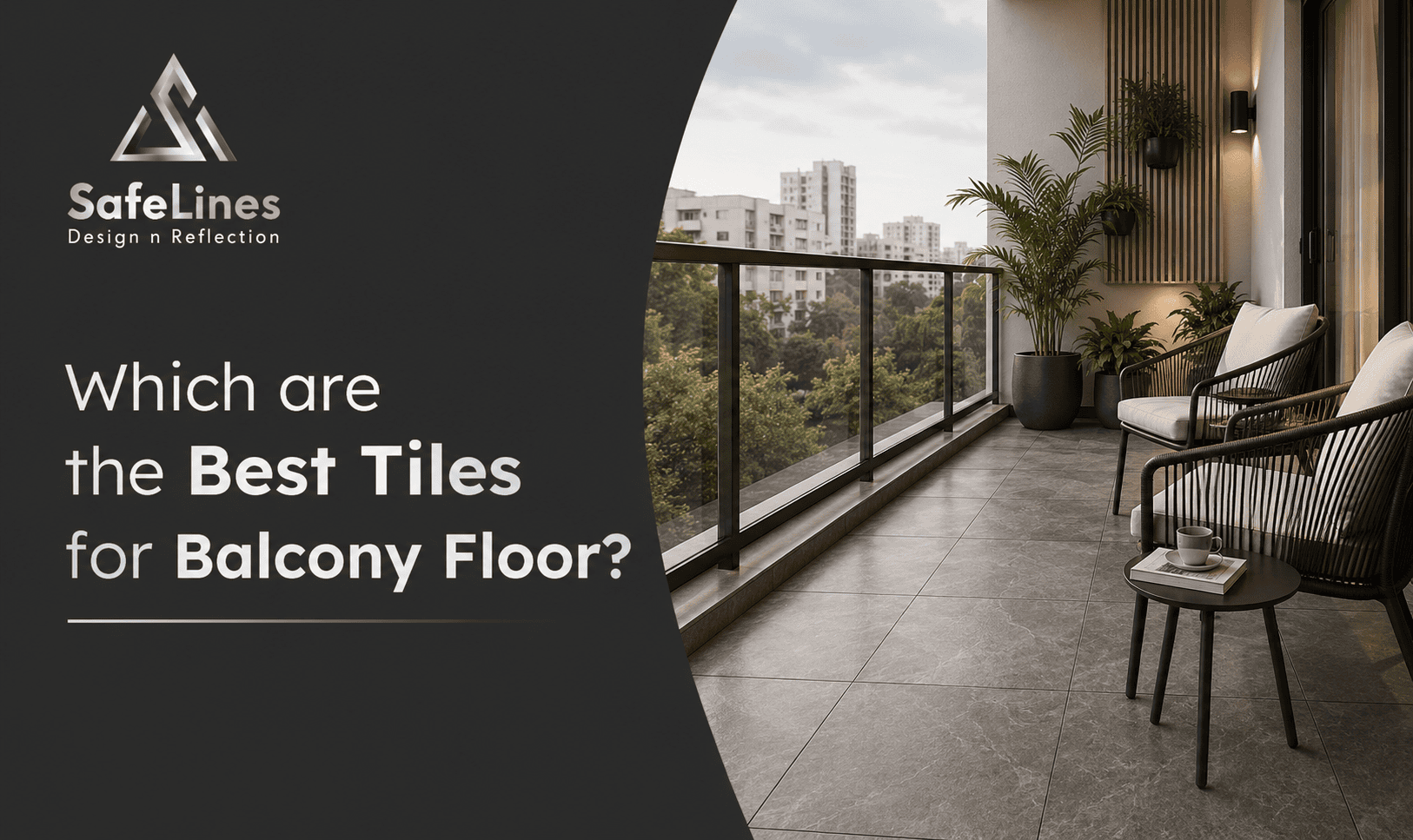
Modern homeowners nowadays are making sure to utilize every corner of the house to the fullest, and balconies remain first on the list for such smart home upgrades. Gone are the days when balconies were only meant for letting in fresh air or improving indoor light; they are now being transformed into cozy reading nooks, stylish mini-lounges to relax and lush vertical gardens. As these spaces become an extension of home interiors, every design element seems important. Among these elements, balcony tiles often have the greatest impact, as they influence both the overall look and the everyday usability of the space.
However, appearance is only one part of the equation. The balcony tiles should be able to withstand constant exposure to sun, rain, dust and changing weather while remaining safe, durable and easy to maintain. With an abundance of options available in the market, how do you choose the best tiles for balcony floor?
This guide explores the best outdoor balcony tiles, compares the most suitable options, and highlights the key factors to consider before choosing the ideal flooring for your outdoor space.
5 Best Outdoor Tiles for Balcony Floor
Here are five outdoor floor tile options worth considering before making a final choice.
1. Porcelain Tiles
Porcelain is probably the best choice for aesthetic balconies because it is available in a remarkably wide range of designs. You can find tile options that resemble concrete, marble, slate, stone and even timber. That gives homeowners plenty of room to work with an existing interior style instead of treating the balcony as a completely separate space.
A porcelain tile for outdoor balcony areas can work particularly well in contemporary apartments. Large-format designs can give a compact balcony a cleaner appearance, while patterned or stone-inspired options can make a plain space feel more considered.
2. Anti-Skid Tiles
Some homeowners prioritize a floor that puts practicality ahead of decoration, and anti-skid tiles seem to make sense here. Their surface is designed to provide more grip than a smooth flooring finish, which makes them a safer choice for high-rise balconies.

However, the appearance can vary quite a bit. Some balcony anti-skid tiles have a fairly subtle texture, while others have a more pronounced surface. They do not have to look industrial, either. There are designs available in plain colours, stone patterns and other finishes.
3. Wood-Look Tiles
Timber has a natural warmth that works particularly well in spaces filled with plants and outdoor furniture. The problem is that actual wood requires more care in an exposed setting. Balcony wood flooring tiles offer a way to get a similar visual effect while keeping the familiar tile format.
Wood-look tiles are available in plank shapes and a range of shades, including pale oak-style colours and darker brown tones. They can make a small balcony feel warmer without introducing too many different materials. For modern balcony flooring, a simple wood-look tile pattern serves the same purpose as a wooden floor.
4. Natural Stone-Look Tiles
Stone-inspired tiles are usually preferred by homeowners who want a more earthy appearance. Some popular patterns like slate, limestone and other stone-like patterns complement the planters, wooden furniture and neutral walls.
You get the character of a stone surface while having access to the consistency of manufactured tile designs. While some patterns are subtle, others have noticeable variation across individual pieces. This option is worth considering if you want the balcony to feel more like an outdoor garden space than another indoor room.
5. Ceramic Tiles
Ceramic tiles are available in an enormous variety of colours, patterns and sizes. They can be considered for balconies that have suitable protection from the elements, provided the particular product is recommended for the intended application.
Their relatively cost-effective pricing can make them attractive for homeowners working with a tighter renovation budget. There is still a reason to check the product carefully before buying, though. Not every ceramic tile is made for outdoor conditions. A balcony that is fully exposed to rain needs a different level of consideration from a covered balcony that receives little direct weather.
Top Balcony Floor Tile Options Compared
| Tile Type | Estimated Price / Sq. Ft. | Water Resistance | Slip Resistance | Maintenance |
| Ceramic Tiles | ₹35–₹60 | Suitable for covered balconies | Lower grip on smooth finishes | Regular sweeping & mopping |
| Anti-Skid Tiles | ₹40–₹80 | Suitable for wet areas | Better grip when wet | May need extra cleaning around texture |
| Wood-Look Tiles | ₹60–₹130 | Good for outdoor use when porcelain-based | Depends on surface finish | Regular sweeping & mopping |
| Stone-Look Tiles | ₹50–₹120 | Depends on the tile | Better with textured finishes | Regular cleaning |
| Porcelain Tiles | ₹55–₹120 | Low water absorption | Depends on surface finish | Easy routine cleaning |
What Makes a Tile Suitable for a Balcony Floor?
Apart from appearance, every tile type has different performance characteristics. The following criteria help narrow down the tile options for modern balcony flooring.
Water Resistance
In regions with frequent rains in India, especially in the northeast, water resistance is one of the most important criteria that can’t be overlooked. Particularly during monsoon season, the balcony floor may remain wet for a long time, so the tile’s water absorption should be checked before purchase.
The drainage of the balcony plays a bigger role here. Water should have a clear path towards the drain rather than remaining on the surface for long periods. Even the best tiles for balcony floor cannot compensate for poor drainage.
Anti-Skid Surface for Safety
A wet balcony can become difficult to walk across if the flooring has a very smooth surface. Therefore, gripping should be the main concern, particularly in homes with children or older family members.
Instead of judging a tile only by how rough it feels in a showroom, check its stated slip or surface specifications and intended application. The right level of texture also depends on how the balcony is used.
Resistance Against Weather Changes
Outdoor flooring has to live with more than occasional rain, direct sunlight, dust, and temperature changes that can affect a surface over time.
A balcony that receives strong afternoon sun may need more consideration than a shaded, covered space. Always check that the manufacturer’s recommended application covers the conditions in which you plan to use the tile.
Easy Maintenance
Balcony floors naturally collect dirt faster than floors inside the home. Dust blows in, leaves fall from nearby plants, and soil can be carried across the surface while watering pots.
A practical surface should be reasonably easy to sweep and wash. While very deep textures may offer good grip, they can also hold more dirt. Therefore, cleaning requirements should be considered alongside safety.
How to Choose the Right Balcony Tiles for Your Home?
Here are some expert tips that will help you choose the best tiles for your balcony floor:
Consider Your Balcony Exposure
Before everything else, start with the balcony itself.
- Is it completely open?
- Does another floor provide overhead cover?
- Does it receive direct afternoon sunlight?
These details can change the type of tile that makes sense. For example, a west-facing balcony can receive strong sunlight for several hours. Another balcony may remain shaded for most of the day but receive wind-driven rain during storms.
Match Tiles With Your Home Style
The balcony does not have to copy the living room, but the two spaces should not feel disconnected either. A concrete-look tile can suit a contemporary apartment, while wood-look flooring may feel more comfortable alongside warm furniture and plenty of greenery.
Think about the railing, walls and furniture before choosing the floor. A busy tile pattern can become overwhelming when several other design elements are already competing for attention.
Choose the Right Tile Size
Tile size affects both the appearance and installation of a balcony. Large tiles can give a small space a quieter visual look because there are fewer grout lines. They can also be harder to install around drains, corners and sloping areas.
Smaller tiles provide more flexibility where the balcony has an unusual shape. The installer should consider the existing floor, drainage slope and layout before finalizing the size.
Common Mistakes to Avoid While Selecting Balcony Tiles
It is natural to fall for looks while choosing tiles in a showroom full of visually appealing options, but usability always remains the primary factor that determines the longevity and safety of your outdoor space. Here are some of the common mistakes people make while choosing tiles so you know what to avoid before making your final purchase.
Mistake 1: Choosing Indoor Tiles for Outdoor Areas
A tile may look perfect in a showroom and still be unsuitable for an exposed balcony. Indoor products are made for a different environment, so the manufacturer’s recommended application should always be considered.
Mistake 2: Selecting Glossy Tiles
A glossy surface can look striking under showroom lights, but that same smoothness is not necessarily useful on a balcony. Once rainwater reaches the floor, a polished finish can become a poor practical choice. A less reflective surface is generally easier to live with in an outdoor setting.
Mistake 3: Prioritizing Appearance Over Performance
It is easy to fall for a particular pattern or colour and start building the entire decision around it. Balcony flooring needs a little more thought. First, check whether the product suits the space. Then consider its appearance. Reversing those steps can leave you with a floor that looks good but does not suit the way the balcony is actually used.
How Much Do Balcony Tiles Cost?
For a typical Indian home, the price of balcony tiles starts around ₹40 to ₹150 per sq. ft. But it greatly depends on the brand, finish and material you choose. For instance, basic ceramic tiles may start at roughly ₹35–₹60 per sq. ft., while vitrified options usually fall around ₹55–₹120. Porcelain tiles are generally higher, at about ₹80–₹150 per sq. ft.
It is important to note here that these are average material prices. If you opt for more premium designs, larger formats and branded collections, the cost may rise considerably. At the same time, installation usually adds around ₹25–₹40 per sq. ft. Apart from that, old-tile removal, floor preparation, adhesive, grout and other site work further add to the final cost.
Conclusion
The best tiles for balcony should suit both the space and the way you plan to use it. Although porcelain gives homeowners plenty of design choices, anti-skid tiles are worth considering where grip matters more. Wood-look and stone-look tiles can give the balcony a different character, while ceramic may suit covered spaces with less exposure to the weather.
For modern balcony flooring, look at the balcony’s exposure, drainage, size and overall design before choosing a tile. A design that looks attractive in a showroom may not always be the most practical choice for an open balcony.
If you are exploring ideas for your balcony floor, you can visit Safelines Design n Reflection Experience Center in Aizawl to choose from the wide collection of flooring options in different designs, finishes and styles.
FAQs
Are Porcelain Tiles Suitable for Outdoor Balconies?
Yes, porcelain tiles can be a better choice for an outdoor balcony when the particular product is recommended for exterior use. They are available in many finishes, but for a frequently wet balcony, the surface finish and stated outdoor application should be checked before buying.
Can Wood Flooring Tiles be Used on Balconies?
Yes, wood-look tiles can be used on balconies, but you need to ask the seller whether they are suitable for outdoor installation. These tiles provide the appearance of timber while retaining the familiar characteristics of tile. Porcelain-based wood-look options are particularly useful for exposed spaces.
Which Balcony Tiles are Best for Rainy Areas?
For a balcony that receives frequent rain, look for tiles designed for outdoor use and check their water absorption and slip resistance. Porcelain is often considered for exposed areas, while a suitable anti-skid finish can provide better grip when the surface becomes wet. At the same time, proper balcony drainage is equally important.
How Thick Should Balcony Floor Tiles Be?
The appropriate specification depends on the tile, installation method, supporting surface and manufacturer’s recommendations. Rather than choosing a tile solely because it is thicker, check its technical information and confirm that the product is intended for the conditions of your balcony.
Which Type of Tile is Not Recommended for Outdoor Use?
Tiles intended only for indoor applications should not be used on an exposed balcony without confirmation from the manufacturer. Highly polished surfaces or high-gloss tiles can also be unsuitable where the floor regularly becomes wet.