

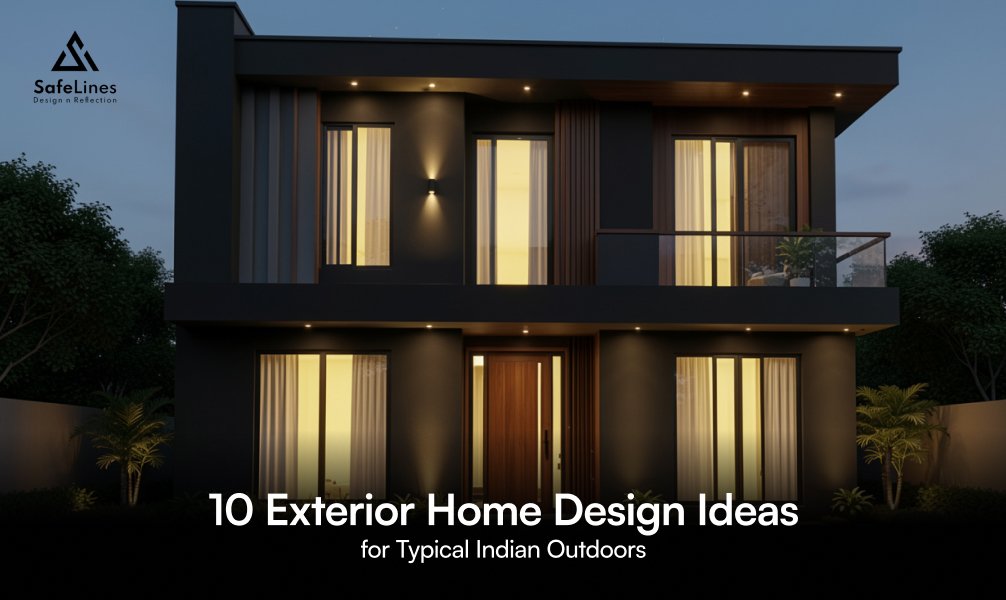
In Indian homes, exterior design is less about appearance and more about durability. It directly affects how well a structure handles heat, rain, and long-term exposure. Materials that look appealing initially often fail under prolonged exposure to sunlight, moisture, and dust. Therefore, Indian homes require practical exterior home design ideas that aren’t just visually aesthetic but also last.
A well-planned exterior balances durability with visual clarity. It ensures that the facade maintains its finish over time while still reflecting the overall character of the home.
If you are planning a home exterior makeover or starting from scratch, this expert-selected list of exterior home design ideas will help you create a facade that feels stylish, current, and truly your own.
10 Practical Exterior Design Ideas for Homes
The following exterior home design ideas are drawn from real execution across Indian homes. Each option is included for its practical performance, manageable upkeep, and compatibility with everyday residential use.
Stone Wall Cladding
Stone cladding remains one of the most reliable exterior wall solutions across Indian homes. It performs consistently in heat, dust, and rain, making it suitable for front elevations and compound walls.
It is commonly used as a highlight section in compact homes, while larger facades extend it across wider areas. Natural stones such as sandstone and slate retain their appearance even under constant outdoor exposure.
Dust tends to settle in grooves, especially in rough finishes. However, cleaning once every few weeks with water keeps the surface manageable. Proper installation ensures long-term durability without peeling or cracking.
The average cost for stone wall cladding ranges between ₹250 – ₹700 per sq ft, depending on the material and quality.
| Pros | Cons |
| High durability in heat and rain | Slight dust accumulation in joints |
| Natural texture hides minor stains | Installation requires skilled labour |
| Long lifespan without repainting | Heavier load on walls |
Wooden Finish Panels (WPC)
Wooden tones bring warmth to exterior design, but natural wood reacts quickly to Indian weather conditions. WPC panels address this issue while maintaining a similar visual appeal.
They are commonly used around balconies, facade strips, and entrance sections. These panels maintain a stable appearance without the swelling or cracking typically seen in natural wood during monsoon cycles.
Vertical WPC strips can create a sense of height, while broader applications help balance the facade visually.
The cost for WPC exterior panels in India usually falls in the range of ₹250 to ₹600 per square foot, depending on thickness and finish quality.
| Pros | Cons |
| Resistant to moisture and termites | Slight colour fading over the years |
| Consistent finish without cracking | Cannot be refinished like real wood |
| Works well in shaded elevations | Requires a proper fixing framework |
Texture Paint Finishes
Texture paint remains one of the most widely used solutions for exterior wall finishes in India. It offers variation without requiring structural changes, making it accessible for most homes.
Different textures create depth and break the flat look of plain paint. It works effectively as a base layer, especially when combined with stone, tiles, or panels. Lighter shades perform better outdoors by reflecting heat.
The average cost for textured exterior paint generally ranges between ₹80 to ₹180 per square foot, depending on the type and layering.
| Pros | Cons |
| Cost-effective compared to cladding | Requires repainting after some years |
| Variety of patterns available | Rough textures collect dust |
| Easy to apply on existing walls | Quality depends on workmanship |
Brick Cladding
Brick cladding has made a strong return in Indian exterior home design ideas, especially in spaces that prefer a more grounded and natural finish.
It performs steadily under heat and maintains consistent colour over time. In cities with higher pollution, the surface may darken slightly, which blends into the overall look rather than appearing uneven.
It is typically used across larger facade sections, while smaller applications work well as accent walls. The average cost for brick cladding usually stays within the range of ₹150 to ₹350 per square foot, depending on whether real bricks or tile formats are used.
| Pros | Cons |
| Strong resistance to weather | Slight moisture retention if not sealed |
| Natural aging adds character | Requires proper joint finishing |
| Low repainting requirement | Limited color variation |
Exterior Tiles (Elevation Tiles)
Elevation tiles are a common part of modern home facade design, especially in builder floors and urban houses. They offer a clean and uniform surface that responds well to rain exposure.
These tiles resist water absorption, which helps prevent seepage marks often seen in painted walls. They are usually applied in sections to maintain visual balance across the facade.
The cost of exterior tiles generally ranges between ₹120 to ₹300 per square foot, depending on design and quality.
| Pros | Cons |
| Smooth surface allows easy cleaning | Improper fixing may lead to detachment |
| Resistant to rain and stains | Visible joints if not aligned properly |
| Consistent colour over time | Limited flexibility after installation |
Glass Railings & Facade Panels
Glass elements add openness and a refined appearance to exterior spaces, especially in balconies and upper-level facades. Toughened glass performs reliably when installed with proper framing.
In Indian conditions, glass remains structurally stable, but its appearance depends on regular cleaning, as dust and water marks remain visible. It is best suited for designs that emphasize openness and is often used selectively in compact layouts.
The cost of glass railings generally ranges between ₹500 to ₹1200 per square foot, depending on thickness and fittings.
| Pros | Cons |
| Enhances openness and light | Requires frequent cleaning |
| Works well with modern designs | Visible dust and water marks |
| Strong when toughened glass is used | Needs proper safety installation |
Metal/ACP Panel Cladding
ACP panels are widely used in modern exterior home designs, especially in urban settings. They provide a sharp and consistent finish over time.
These panels handle rain and dust exposure without visible surface damage. Lighter shades reflect heat more effectively, making them suitable for high-sunlight areas.
They are commonly used in contemporary front elevation designs where a clean and minimal appearance is preferred. The cost usually falls between ₹180 to ₹400 per square foot, depending on thickness and finish.
| Pros | Cons |
| Lightweight and easy to install | Can heat up under direct sunlight |
| Smooth finish resists dust sticking | Requires proper framing |
| Consistent modern appearance | Limited repair flexibility |
Pergola & Exterior Louvers
Pergolas and louvers add both function and architectural depth to exterior spaces. They are commonly used in terraces, balconies, and parking areas where partial shade is required.
In Indian homes, these structures allow airflow while reducing direct heat exposure. Metal and WPC louvers perform reliably outdoors when installed with proper spacing.
They are best suited for layouts with adequate outdoor space for proper placement. The cost typically ranges between ₹400 to ₹1200 per square foot, depending on design and material.
| Pros | Cons |
| Reduces direct heat exposure | Requires periodic cleaning |
| Enhances outdoor usability | Installation requires structural support |
| Adds architectural depth | Material choice affects longevity |
Exterior Lighting Design
Lighting defines how a home appears after sunset. It highlights textures, improves visibility, and adds depth to the facade.
Warm lighting works well with stone, brick, and textured surfaces, while focused lighting helps define architectural lines. When planned alongside the design, lighting supports both function and appearance.
A basic setup can start around ₹8,000 – ₹15,000, while more detailed lighting can range between ₹25,000 to ₹80,000 or more, depending on scale and quality.
| Pros | Cons |
| Improves visibility and safety | Requires proper waterproof fixtures |
| Highlights textures and materials | Electrical maintenance needed |
| Enhances night-time appearance | Poor placement reduces effectiveness |
Compound Wall & Gate Design Integration
Compound walls and gates face constant use and direct exposure, making durability essential.
Metal gates with protective coatings handle regular usage effectively, while compound walls finished with stone, tiles, or textured paint maintain consistency with the main facade.
The costs vary depending on materials, with metal gates generally ranging between ₹700 to ₹2000 per square foot.
| Pros | Cons |
| Enhances security and privacy | Requires periodic repainting or polishing |
| Completes the overall exterior look | Metal gates may rust if untreated |
| Allows design consistency | Moving parts need maintenance |
Why Exterior Home Design Ideas Matters for Indian Outdoors?
Indian weather conditions have a significant effect on exterior surfaces. Heat causes expansion, rain introduces moisture, and dust settles across exposed areas. Materials that perform well indoors do not maintain the same stability outside.
A well-planned exterior design reduces long-term maintenance and prevents repeated repairs. It also ensures a consistent appearance across seasons. Most homes benefit from using a balanced combination of materials rather than relying on a single finish.
Common Mistakes to Avoid While Designing Exteriors
Mistake #1. Mixing Too Many Materials
Many homeowners combine multiple finishes in a single facade. While each material performs well individually, excessive mixing often leads to visual imbalance and uneven aging. A controlled combination of two or three materials delivers better results.
Mistake #2. Using interior materials outside
Materials that perform well indoors often react differently when exposed to outdoor conditions. Laminates, standard plywood, and interior-grade paints degrade under prolonged sunlight and moisture exposure. Exterior-grade alternatives provide better long-term stability.
Mistake #3. Ignoring Maintenance
Every exterior finish follows a maintenance cycle. Painted surfaces lose sharpness under direct sunlight, while wood-based finishes respond to heat and moisture. Planning maintenance helps maintain a balanced appearance over time.
Mistake #4. Poor Lighting Placement
Exterior lighting is often added toward the end of construction, leading to uneven placement. Misaligned lighting fails to highlight architectural elements effectively. Planning lighting alongside the exterior design ensures better results.
Conclusion
A well-designed home exterior in Indian conditions is defined by how consistently it performs over time. Materials that respond steadily to heat, rain, and dust without frequent intervention maintain a more stable appearance and reduce long-term upkeep.
Most effective facades rely on a balanced mix of materials rather than a single finish. This approach improves durability while keeping the overall design visually cohesive.
If you are planning your home exterior, choosing the right material is a critical decision that directly impacts performance, maintenance, and long-term value. Safelines offers a range of exterior solutions, including elevation tiles, WPC panels, and cladding materials, designed to suit Indian conditions and support long-term performance.
FAQs
What is the Best Exterior Finish for Indian Homes?
Stone cladding and exterior tiles remain dependable choices, as they handle heat, rain, and dust well while maintaining a consistent appearance with manageable cleaning over time.
Which Exterior Material Requires the Least Maintenance?
ACP panels and WPC finishes usually require minimal upkeep, as they resist moisture, do not crack easily, and respond well to regular dust cleaning cycles.
Is Wall Cladding Better than Normal Paint?
Wall cladding generally lasts longer under outdoor exposure and reduces frequent repainting needs, while paint works better for budget-friendly projects with planned maintenance cycles.
Which Colours are Best for House Exteriors in India?
Lighter shades such as off-white, beige, and light grey reflect heat better, show slower fading, and help maintain a cleaner appearance in dust-prone surroundings.
How Important is Exterior Lighting in Home Design?
Exterior lighting improves visibility after dark and helps highlight facade elements, ensuring surfaces and pathways remain clear while maintaining a balanced night-time appearance.