

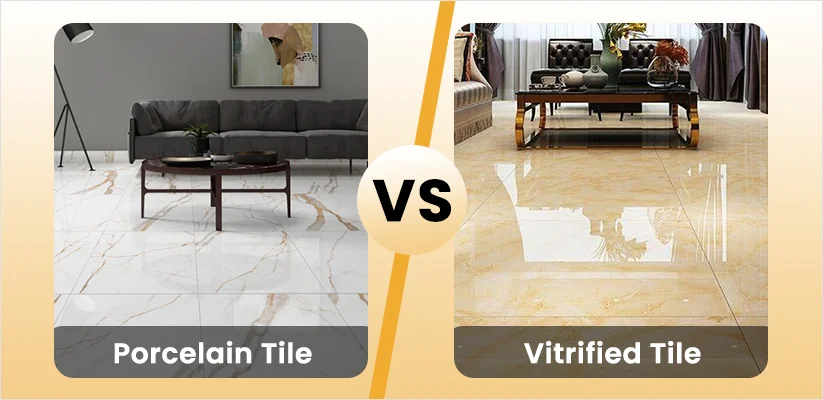
Building your dream home or renovating it into the perfect space you have always imagined comes with countless decisions. But few are as tricky, or we can say as important, as choosing the right flooring. Even if you ask around for the best flooring options in 2026, the debate between Vitrified Tiles vs Porcelain Tiles always comes up.
Both options are highly popular for their durability, sleek finishes, and modern appeal, yet each offers unique advantages. For many, deciding which one to choose can be quite confusing due to limited information and understanding. See, the decision to choose the right tile shouldn’t solely be based on the style; factors like functionality, longevity, and the subtle impression your floor creates are equally important.
With this guide, you no longer have to struggle with choosing the right tiles or rely solely on someone else’s recommendation. We have compared Vitrified Tiles and Porcelain Tiles side by side, so you can make an informed decision and pick the flooring that perfectly fits your lifestyle while making your 2026 home look and feel amazing.
What are Vitrified Tiles?
Vitrified tiles are ceramic tiles made through a special process called vitrification. In this process, clay, silica, quartz, and feldspar are fused at a very high temperature, usually between 1,200°C to 1,300°C. The materials melt and form a glass-like surface that becomes hard, dense, and highly durable. This makes the tile less porous, stronger, and more resistant to stains and moisture.
Vitrified tiles are known for their long life, uniform texture, and clean appearance. They are often preferred in modular homes because they stay stable in different temperature conditions and do not absorb water easily. The dense structure of the tile makes it ideal for high-traffic areas like living rooms, kitchens, hallways, and commercial spaces.
There are different types of vitrified tiles, such as double-charged vitrified tiles, full-body vitrified tiles, glazed vitrified tiles, and soluble salt tiles. Glazed vitrified tiles offer more design options, patterns, and finishes, while full-body vitrified tiles are strong throughout the thickness of the tile, which helps in rough use or industrial spaces.
Pros and Cons of Vitrified Tiles
| Pros | Cons |
| Highly durable and long-lasting | Requires skilled labour for perfect installation |
| Low water absorption; suitable for most climates | Limited repair options if a tile cracks |
| Scratch-resistant and easy to maintain | More expensive than basic ceramic tiles |
| Available in many designs, textures, and finishes | |
| Stain-resistant and ideal for high-traffic areas |
What are Porcelain Tiles?
Porcelain tiles are a type of ceramic tile made with very refined clay and selected minerals like silica and feldspar. The mixture is pressed under high pressure and then fired in a kiln at 1,200°C to 1,400°C.
The dense surface handles daily foot movement well and does not stain easily. Many homeowners choose porcelain for kitchens, bathrooms, balconies, and even outdoor spaces because it remains steady in heat, moisture, and mild weather changes.
There are different types of porcelain tiles available in the market. Glazed porcelain tiles have a printed or coated top layer that offers many patterns and colors. Full-body porcelain tiles have color and design running through the entire thickness, normally 8 mm to 12 mm.
Pros and Cons of Porcelain Tiles
| Pros | Cons |
| Extremely low water absorption; great for humid and rainy regions | Harder to cut due to high density |
| Highly durable and long-lasting | Installation requires skilled professionals |
| Resistant to stains, scratches, and moisture | Heavyweight may not suit all structures |
| Suitable for both indoor and outdoor spaces | |
| Wide range of designs, textures, and finishes |
What are the Key Differences Between Vitrified Tiles vs Porcelain Tiles?
Both vitrified and porcelain tiles look modern and clean, but their performance changes based on density, strength, water handling, and finishing. Understanding these points helps you choose the right tile for each room without confusion or second thoughts.
Density and Durability
Porcelain tiles are made from refined clay and fired at 1,200°C to 1,400°C, which creates a very compact and strong body. Because of this, porcelain tiles handle daily foot movement, moisture, and surface pressure very well.
Vitrified tiles also gain strength through the vitrification process, where raw materials melt and form a dense, glass-like structure.
Both vitrified and porcelain tiles fall within the PEI 3 to PEI 5 range, but many porcelain tiles achieve strong PEI 5 ratings more consistently because the body is more compact and harder.
PEI Rating Guide
- PEI 1–2: Light use wall areas
- PEI 3: Regular home flooring
- PEI 4: High movement spaces inside a home
- PEI 5: Commercial and heavy foot traffic zones
Ideal Usage Areas
Porcelain tiles suit kitchens, bathrooms, balconies, and semi-outdoor areas. Their dense body handles moisture without swelling, and the low absorption level keeps the tile stable when it comes in contact with frequent water.
Vitrified tiles are ideal for living rooms, hallways, bedrooms, offices, and commercial interiors. Their uniform look and strong structure help maintain a neat appearance across larger spaces. Full-body vitrified tiles also hide minor scratches, which is helpful in active areas.
Water Absorption and Stain Resistance
Porcelain maintains a static water absorption level below 0.5 percent, which controls staining and moisture damage.
Vitrified tiles also offer good stain resistance, especially in double-charged and full-body formats. Many good vitrified tiles also reach 0.5 percent or below in water absorption.
Surface Look and Finish
Porcelain tiles offer matte, polished, satin, stone texture, and large slab styles. Meanwhile, vitrified tiles come in double-charged, glazed, and full-body options, along with marble look, wood look, and stone-inspired surfaces.
Installation and Maintenance
Both tiles need a level base and skilled installation. Porcelain slabs may require special cutters due to their density. Maintenance stays simple for both. Regular cleaning and timely grouting help the flooring maintain its appearance and strength over time.
Cost Comparison
Vitrified tiles usually start around ₹60 to ₹150 per sq ft, depending on type and finish. Porcelain tiles generally begin around ₹80 to ₹200 per sq ft due to the refined clay body and higher firing strength.
How to Choose the Right Tile for Your Space?
Choosing the right tile becomes easier when you look at the space, the way the house is used, the climate around you, the style you prefer, and the budget you have kept for flooring. So, here’s your buying guide to help you choose the best tiles for your space.
1. Choose Based on Location
Living rooms and bedrooms usually stay dry and welcome steady foot movement. Kitchens and bathrooms handle water, spills, and cleaning more often. Balconies and outdoor sections face sunlight, rain, and dust. Because of this, tile selection must match the behavior of that space.
- Living Room: Vitrified tiles and glazed porcelain tiles work well because they stay strong, look refined, and handle daily movement with ease.
- Bedroom: Matte vitrified tiles or ceramic floor tiles feel comfortable, warm, and safe for daily use.
- Kitchen: Porcelain tiles with low water absorption suit kitchens because they stay strong even with spills and frequent cleaning.
- Bathroom: Anti-skid porcelain tiles or textured vitrified tiles help in wet areas and provide better safety.
- Balcony/Outdoor: Full-body vitrified tiles and porcelain tiles with higher grip handle sunlight, weather changes, and dust better than softer options.
- Commercial Spaces: Full-body vitrified tiles and heavy-duty porcelain tiles work best because they handle high movement, pressure, and load.
2. Choose Based on Lifestyle
The way a family lives also guides the flooring decision. Some homes have children who run around and drop things. Some houses stay busy with guests. Some families prefer calm and low-maintenance spaces.
- Families with kids: Full-body vitrified tiles can handle scratches, hits, and daily activity.
- High-traffic homes: Heavy-duty porcelain tiles remain strong under continuous foot movement.
- Minimal-maintenance users: Glazed vitrified tiles are easy to clean and do not need frequent care.
- Luxury interior seekers: Polished glazed vitrified tiles and premium porcelain tiles bring a fine, smooth look.
- Rental property owners: Durable vitrified tiles with simple finishes stay strong for long years and fit most interior styles.
3. Choose Based on Climate
Climate has a direct impact on how tiles behave over the years. Homes in humid regions deal with moisture in the air, damp corners, and slow-drying surfaces. Tiles with higher density work better there because they stay stable and do not allow moisture to seep in.
- Coastal areas: Salt in the air affects regular tiles, so high-density vitrified tiles are a better choice.
- Dry and hot climates: Matte vitrified tiles stay comfortable underfoot and do not heat up quickly.
- Humid & rainy regions: For humid and rainy areas, especially places like Northeast India, porcelain tiles work best because their low water-absorption keeps the flooring stable and protects it from moisture-related issues.
4. Choose Based on Aesthetic Style
Every home carries a personality, and the tiles play a major role in shaping that first impression. Some rooms feel calm and simple, while others need a rich and expressive design. The look you want decides the finish, pattern, and texture of the tile.
- Modern: Large-format vitrified tiles with clean patterns suit modern layouts.
- Ultra-luxury: Polished porcelain tiles with marble-like designs add a premium touch.
- Minimal: Soft matte finishes, light shades, and subtle textures support minimal interiors.
- Rustic: Stone-textured tiles and earthy vitrified tiles create a warm and natural feel.
- Scandinavian: Light wood-look porcelain tiles and pastel matte tiles match this clean and calm style.
5. Choose Based on Budget
Budget planning helps you decide the right balance between looks, durability, and long-term value. Once you fix the budget clearly, it becomes easier to compare options and select tiles that give the best performance for your price range.
- Premium: High-end porcelain slabs, polished vitrified tiles, and designer finishes.
- Mid-range: Standard vitrified tiles and glazed porcelain tiles with good durability.
- Budget: Ceramic tiles and basic vitrified tiles that still offer strength and simple style.
Best Tile Choice for 2026
When it comes to selecting the ideal flooring for 2026, vitrified and porcelain tiles remain the most reliable options for modern homes. Both boast durability, sleek aesthetics, and low maintenance, yet they differ in performance, climate compatibility, and installation needs.
To help you understand which one suits your home better, we have included a clear side-by-side comparison table that breaks down their strengths and limitations, making your decision simpler and more confident.
| Feature | Vitrified Tiles | Porcelain Tiles |
| Price | More affordable; great for budget-friendly projects | Slightly costlier due to higher density and quality |
| Durability | Strong and long-lasting for regular home use | Ultra-durable; ideal for heavy traffic and harsh conditions |
| Water Absorption | Low absorption; suitable for most climates | Very low absorption; performs best in humid and rainy regions |
| Best Areas to Use | Living rooms, bedrooms, corridors, and commercial spaces | Kitchens, bathrooms, balconies, and outdoor areas |
| Overall Look & Feel | Sleek, modern designs with a wide variety | Premium, natural-stone-like appearance with refined detailing |
Vitrified Tiles vs Porcelain Tiles: What’s Popular in 2026?
In 2026, home interiors are moving towards calm, elegant, and functional designs. Both vitrified tiles and porcelain tiles continue to be popular, but the way they are used reflects the latest trends in modular homes and modern makeovers.
So, here are some tile trends for 2026:
Sleek, Minimalist Interior Trends
Minimalist interiors dominate, but minimal does not mean plain. Soft textures, neutral tones, and subtle patterns are preferred. Large-format porcelain slabs and matte vitrified tiles provide clean sightlines with fewer grout lines, making spaces feel expansive and organized.
Tile Sizes That Wow
Oversized tiles are highly sought after in 2026. Sizes like 600×1200 mm, 800×800 mm, and even 1200×2400 mm slabs are popular for floors and walls alike. Large tiles reduce grout visibility, create a continuous surface, and add a sense of luxury.
2026’s Most Desired Color Palette
Soft, earthy neutrals such as stone grey, beige, muted olive, and warm sand dominate interiors. Accent colors like deep blue, terracotta, and forest green are used sparingly to create focal points. Both vitrified and porcelain tiles follow this palette.
Contemporary Style Preferences
Homeowners now prefer textures and finishes that feel natural. Stone-effect porcelain, wood-look vitrified tiles, and matte finishes are widely chosen. Designers often mix textures, such as matte floors with polished walls or patterned feature tiles, to add depth and personality without overwhelming the space.
Luxurious Finishes & Patterns
Marble-look porcelain slabs, textured stone-effect tiles, and digitally printed vitrified tiles with wood or concrete patterns are trending. Large-format tiles in kitchens and bathrooms create a seamless, hotel-like appearance while staying low-maintenance.
Conclusion
Selecting the right tile comes down to understanding how each type performs in specific spaces. Vitrified tiles are ideal for living rooms, hallways, bedrooms, and high-traffic interiors where long-term durability and easy upkeep are priorities. Porcelain tiles are best suited for kitchens, bathrooms, balconies, and semi-outdoor areas where water resistance, low absorption, and surface strength are essential.
For luxury or statement spaces, polished porcelain slabs and full-body vitrified tiles deliver the seamless, high-end look that modern interiors demand.
At Safelines, we understand that most homeowners already know the kind of look they want; they just need clarity on what works best where. That’s why our team pays attention to both the functional needs of each room and the overall design intent. Instead of overwhelming you with options, we help you narrow down choices that genuinely suit your lifestyle.
Our curated range of vitrified and porcelain tiles is chosen with these small but important details in mind, so you can make confident decisions without second-guessing. And because Safelines has built its reputation on consistency and honest recommendations, customers trust us to help them create spaces that look beautiful and stay practical for years.
FAQs
Which Tile is Better for Kitchens — Vitrified or Porcelain?
Porcelain tiles are a better choice for kitchens because their dense structure handles heat, spills, and stains well. They stay stable for many years, even with daily cooking activity.
Which Tile is Best for Wet Areas?
Porcelain tiles work best in wet areas because they have very low water absorption and offer better grip options. They remain steady and safe in bathrooms and utility spaces.
Can Vitrified Tiles be Used Outdoors?
Vitrified tiles can be used outdoors only if they have a textured, anti-skid finish. Smooth vitrified tiles are not suitable for rain-exposed or high-moisture outdoor zones.
Do Porcelain Tiles Require Sealing?
Porcelain tiles generally do not need sealing because of their dense body. Only unglazed or matte-textured varieties may need light sealing for extra stain protection.
What is the Lifespan of Porcelain Tiles?
Porcelain tiles have a long lifespan and can last 20 to 30 years with regular cleaning and proper installation. Their dense build helps them handle wear for many years.
Are Porcelain Tiles Better than Full-body Vitrified Tiles?
Porcelain tiles perform better in wet areas, but full-body vitrified tiles offer uniform strength and suit high-traffic indoor zones. Each works best when matched with the right space.
Which Tile is Best for the Kitchen, Bathroom, and Outdoor Areas?
Porcelain tiles are ideal for kitchens because they stay firm during heat and spill exposure. Bathrooms need porcelain with anti-skid surfaces for safer footing. Outdoor spaces require textured vitrified or porcelain tiles designed for rough weather and foot traffic.