

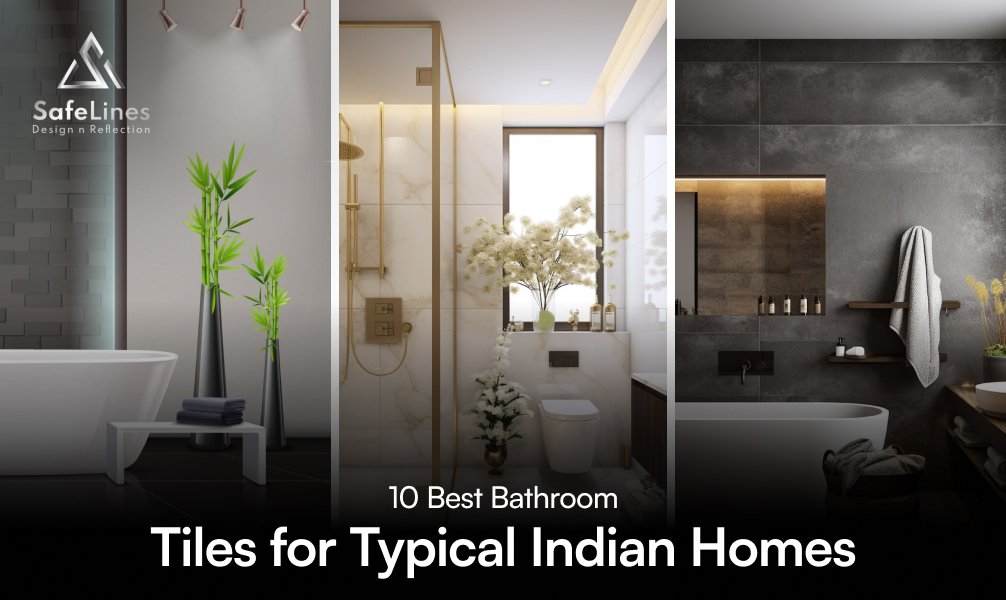
Bathrooms are often small, but their value goes far beyond size. Clean tiles, smooth walls and shiny floors make them a personal, refreshing retreat after a long day at work. Yet, years of daily use, careless mornings, rushed evenings, and constant cleaning gradually dull even the most beautiful surfaces. Even the best bathroom tiles that once looked flawless rarely stay the same after a few years.
Most disappointment does not come from poor materials. It comes from choosing tiles without understanding how Indian bathrooms are actually used. This understanding is rarely found in glossy catalogues or showroom displays.
So, no matter if you’re looking to renovate your bathroom space or considering building a new one from scratch, this guide will help you decide the best bathroom tiles according to your home. These bathroom tile ideas are curated by our expert team at Safelines, drawing on years of experience, the latest trends, and a deep understanding of everyday Indian bathroom use.
2026’s List of the Best Bathroom Tile Ideas
Tile preferences change quietly on sites, not loudly on social media. Although every tile manufacturer claims to offer the best in the market, not all live up to their promises in real-life use. That’s why we have curated this list of the best bathroom tile ideas for 2026, keeping Indian homes in mind.
1). Large-Format Matte Bathroom Tiles
Large-format matte tiles are now commonly used for both bathroom walls and floors. Their biggest advantage is fewer joints, which means fewer places for grime to settle. Over time, this reduces visible ageing, especially in bathrooms used by multiple people.
These tiles work well with Indian bathroom habits. However, homeowners often overlook installation skills while installing large-format tiles, which we advised shouldn’t happen. When done correctly, large-format matte porcelain bathroom tiles remain calm and unobtrusive for years.
Best For:
- Medium to large bathrooms with smooth floor slopes
- Homeowners seeking low-maintenance elegance
- Spaces where continuity and modern simplicity are desired
2). Stone-Look Porcelain Bathroom Tiles
Stone-look porcelain tiles replicate the appearance of natural stone while avoiding its unpredictability in wet areas. Over time, real stone often reacts to moisture in ways that are difficult to control in Indian bathrooms.
However, porcelain tiles remain stable. They do not absorb water, and surface texture helps mask minor stains and residue that develop with daily use. Grout lines remain less prominent because the tile pattern naturally breaks visual continuity.
The stone’s appearance feels grounded, while the porcelain body behaves consistently, even after years of washing and exposure.
Best For:
- Common bathrooms and attached baths
- Homeowners wanting natural stone aesthetics with low maintenance
- High-traffic areas requiring durable flooring
3). Textured Neutral Wall Tiles
Textured neutral tiles work well because they do not rely on colour or shine to create impact. Subtle surface movement reduces glare and prevents watermarks from becoming immediately visible.
In Indian bathrooms, where floors and walls are washed frequently, texture helps distribute wear evenly. Soap residue and hard-water deposits tend to blend into the surface rather than forming sharp patches that draw attention.
These tiles remain popular because they allow for variation in cleaning habits without immediate visual consequences. Over time, the bathroom continues to look consistent rather than uneven.
Best For:
- Homes with heavy daily water usage
- Shared family bathrooms
- Spaces where longevity matters more than novelty
4). Anti-Slip Floor Tiles
Anti-slip floor tiles have evolved beyond rough, uncomfortable surfaces. Current finishes provide grip without making the floor feel harsh under bare feet, even with regular use.
In Indian bathrooms, where wet floors are routine, these tiles maintain traction after years of exposure to soap and cleaning agents. Unlike some glossy finishes, they do not gradually polish smooth with repeated washing.
They are among the best bathroom tiles because they address a daily condition rather than an occasional concern. Over time, the floor continues to feel dependable without requiring behavioural adjustments.
Best For:
- Homes with elderly family members
- Children’s bathrooms
- Bathrooms without strict wet–dry separation
5). Fluted or 3D Wall Tiles
Fluted and 3D wall tiles are typically used on limited surfaces, such as shower walls or feature sections. Their depth adds character without relying on reflective finishes.
In Indian bathrooms, vertical textures handle water better than expected. Splash marks dry unevenly, which reduces visible streaking. The pattern absorbs grout lines into the design, making ageing less noticeable over time.
Their use continues because they add interest without affecting function. Even after extended use, the wall maintains its intended presence rather than appearing dated.
Best For:
- Shower back walls
- Powder bathrooms
- Homes looking to add depth without complexity
6). Dark Matte Tiles with Light Grout
Dark matte tiles paired with lighter grout create a controlled contrast that remains readable over time. The matte surface prevents water marks from standing out sharply, while the grout remains visible enough to monitor cleanliness.
In Indian bathrooms, darker floors hide daily wear and minor staining effectively. Lighter grout avoids the heavy, closed-in feeling that dark joints can create as they age.
This combination is often chosen because it balances clarity with practicality, allowing the bathroom to look maintained without constant attention.
Best For:
- Urban apartments
- Homes with regular cleaning support
- Bathrooms with limited natural light
7). Wood-Look Tiles for Dry Zones
Wood-look tiles are rarely used on wet floors in Indian bathrooms. Their strength lies in dry or semi-dry zones such as vanity backs or dressing areas.
They introduce warmth without exposing real wood to moisture. The tile surface handles humidity and cleaning chemicals better than natural materials would in similar conditions.
Their continued use comes from restraint. When limited to appropriate areas, they soften the space without creating maintenance issues later.
Best For:
- Vanity walls
- Dressing spaces connected to bathrooms
- Homes seeking warmth without material risk
8). Soft-Vein White Marble Tiles
Soft-vein marble-look tiles offer the brightness of white surfaces without strong veining that highlights stains and wear. The calmer pattern handles ageing more gracefully.
In Indian bathrooms, white tiles often show watermarks quickly. These softer versions reduce that contrast, allowing marks to fade visually once the surfaces dry.
They are considered among the best bathroom tiles where light is limited and spatial openness is needed without committing to high-maintenance finishes.
Best For:
- Small bathrooms
- Apartments with limited daylight
- Homes preferring subtle finishes
9). Polished Onyx-Look Tiles
Polished onyx-look tiles are mostly used on walls, where foot traffic is not a factor. Their reflective quality helps amplify available light.
In Indian bathrooms, wall applications remain manageable. Watermarks are visible but less damaging over time, as abrasion is minimal. Their appeal continues because they elevate the space without interfering with everyday use when placed correctly.
Best For:
- Feature walls
- Guest bathrooms
- Homes aiming for restrained luxury
10). Metal-Infused Accent Tiles
Metal-infused tiles are one of the best bathroom tiles that are used sparingly, often as borders or niche highlights. In Indian bathrooms, limited exposure keeps them stable.
Moisture does not overwhelm the material when detailing is precise and controlled. They remain relevant because they are not overused. Their presence is felt without becoming dominant.
Best For:
- Shower niches
- Border detailing
- Accent zones
Which Bathroom Tiles are Trending in 2026?
On-site demand does not follow display trends closely. The best bathroom tiles are those that are not just aesthetically pleasing but functional too. Matte surfaces continue to dominate because they reduce visual fatigue and manage water behaviour more calmly.
Large formats remain popular, though drainage and slope considerations are discussed more openly now. There is less interest in high-gloss floors, especially in family homes where maintenance becomes noticeable quickly.
Neutral tones continue to be chosen because they age quietly. Accent tiles appear in controlled areas rather than across full walls. In the end, it is clear that these choices depend on the use, not on display appeal.
Conclusion
Bathroom tiles in Indian homes should be a blend of luxury and functionality. Their real value appears after months of daily use. The best bathroom tiles are those that tolerate water, cleaning, and variation without demanding constant attention.
Across residential work, it becomes clear that thoughtful selection reduces long-term headaches. Bathrooms remain functional, predictable, and visually settled. This practical understanding also shapes how brands like Safelines offer surface solutions, focusing on materials that continue to perform quietly within real Indian homes.
FAQs
Which Type of Tile is Best for Bathrooms?
Tiles that manage moisture well, maintain surface grip, and age evenly tend to perform best. Matte porcelain and textured finishes are commonly preferred in Indian homes.
What are the Latest Trends in Bathroom Tiles?
Larger formats, matte surfaces, restrained textures, and limited accents are being specified more often, based on usability rather than display appeal.
Which is Better, Ceramic or Porcelain Tiles for the Bathroom?
Porcelain tiles generally handle moisture, foot traffic, and long-term wear better. Ceramic tiles are used selectively, mostly on walls with lower exposure.